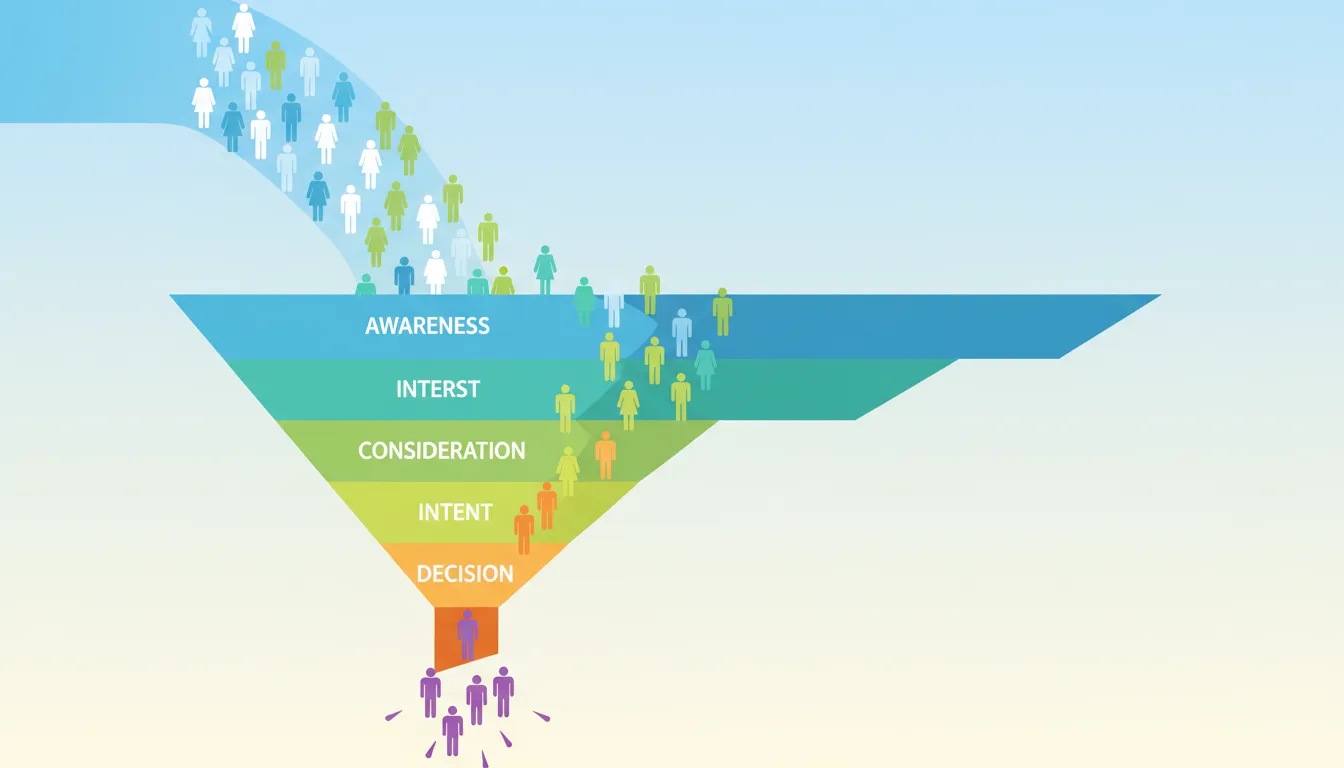
Lead generation has always been the lifeblood of business growth, but the methods that worked even two years ago are producing diminishing returns. Cold outreach response rates continue to decline, generic lead magnets attract increasingly unqualified prospects, and the sheer volume of competition for attention across every digital channel makes it harder to stand out. AI lead generation is not just an incremental improvement over traditional methods — it represents a fundamental shift in how businesses identify, attract, qualify, and convert prospects. At Camfirst Solutions, we implement AI-powered lead generation systems that consistently outperform traditional approaches, and this guide shares the strategies that are delivering real results in 2026.
Why Traditional Lead Generation Is Losing Effectiveness
Understanding why conventional approaches are struggling helps clarify why AI alternatives are gaining traction so rapidly.
The average business professional receives over 120 emails per day. Display ad click-through rates hover below 0.1 percent for most industries. Social media organic reach continues to decline as platforms prioritize paid content. Buyers have become adept at recognizing and ignoring marketing tactics that felt fresh even a few years ago.
The core problem is that traditional lead generation operates on volume — cast a wide net and hope a small percentage converts. This approach generates leads, but quality is often poor and the sales team wastes significant time chasing prospects who were never a good fit.
AI flips this equation. Instead of volume-first approaches, AI-powered lead generation identifies the highest-probability prospects based on behavioral signals, demographic fit, and intent data — then delivers personalized outreach when those prospects are most receptive. The result is fewer leads overall but dramatically higher quality, lower cost per acquisition, and better conversion rates through the entire funnel.
Predictive Lead Scoring with AI
Predictive lead scoring is arguably the highest-impact AI capability for lead generation. Traditional lead scoring assigns points based on static criteria — job title, company size, pages visited, emails opened. These rules are set by humans based on assumptions about what makes a good lead, and they remain fixed until someone manually updates them.
AI-powered predictive lead scoring analyzes thousands of data points across your historical lead and customer data to identify the patterns that actually predict conversion. These patterns often include signals that humans would never think to look for — such as the specific sequence of pages a prospect visits, the time gaps between interactions, the combination of firmographic and behavioral attributes that correlate with closed deals, or even the day of the week when high-value prospects first engage with your brand.
How to Implement Predictive Lead Scoring
Start by ensuring your CRM contains clean, comprehensive data on past leads and their outcomes. The AI needs a substantial dataset of both converted and unconverted leads to identify meaningful patterns. Most AI scoring systems require a minimum of 500 to 1,000 historical lead records to build accurate models.
Integrate your scoring system with all relevant data sources — website analytics, email engagement, social media interactions, form submissions, chat transcripts, and any third-party intent data you have access to. The more signals the AI can analyze, the more accurate its predictions become.
For a deeper dive into how AI scoring transforms sales efficiency, read our guide on how AI lead scoring improves sales. The key takeaway is that businesses implementing AI lead scoring typically see a 30 to 50 percent improvement in sales-qualified lead rates and a corresponding increase in close rates.
Our AI-powered CRM services include predictive lead scoring implementation that integrates directly with your existing sales workflows.
Intent-Based Prospecting
Intent data reveals when potential buyers are actively researching solutions like yours — even before they visit your website or engage with your content. AI makes this data actionable by identifying patterns that signal purchase intent and matching those signals to specific companies and individuals.
First-Party Intent Signals
Your own digital properties generate valuable intent data. AI systems analyze website visitor behavior to identify patterns associated with high purchase intent — repeated visits to pricing pages, extended time on case studies, searches for specific features, and engagement with bottom-of-funnel content.
AI can also analyze aggregate behavior of anonymous visitors. While you may not know who a specific visitor is, AI can identify that a cluster of visitors from a particular company IP range is researching your solutions — signaling an active buying cycle.
Third-Party Intent Signals
Third-party intent data comes from external sources — B2B review sites, industry publications, content syndication networks, and search behavior data. AI platforms aggregate these signals to identify companies that are researching topics and solutions relevant to your offering across the broader web, not just on your own properties.
The combination of first-party and third-party intent data, analyzed by AI, creates a prioritized list of prospects who are most likely to be receptive to outreach right now. This timing advantage is enormously valuable — reaching a prospect during an active evaluation period rather than during a random point in their year can improve response rates by five to ten times.
AI-Powered Content Personalization for Lead Generation
Generic lead magnets and one-size-fits-all landing pages are increasingly ineffective. AI enables real-time content personalization that adapts the experience for each visitor based on their industry, behavior, referral source, and position in the buyer journey.
Dynamic Landing Pages
AI-powered landing pages adjust their headline, body copy, imagery, social proof, and call-to-action based on visitor attributes. A visitor arriving from a healthcare industry search sees case studies from healthcare clients, while a manufacturing visitor sees relevant industry content — all on the same URL.
AI determines which lead magnet is most likely to convert each visitor segment and serves it automatically, resulting in higher conversion rates because every prospect sees content that speaks directly to their situation.
Personalized Content Journeys
Beyond individual pages, AI can orchestrate entire content journeys that guide prospects from initial awareness through consideration to decision. Based on which content a prospect consumes, the AI serves the next most relevant piece of content — creating a personalized nurturing experience that feels curated rather than generic.
This approach works across channels. A prospect who reads a blog post might see a related case study in their next email, followed by a targeted social media ad offering a relevant webinar, followed by a personalized demo invitation once their engagement signals high purchase intent.
Conversational AI for Lead Qualification
AI chatbots and conversational AI have evolved far beyond the scripted, frustrating experiences of early implementations. Modern conversational AI can engage prospects in natural dialogue, ask qualifying questions contextually, provide relevant information, and route high-quality leads to sales teams in real time.
Website Chat and Messaging
Deploy AI chatbots on your website to engage visitors proactively. Rather than waiting for a visitor to fill out a form, conversational AI can initiate relevant conversations based on the visitor’s behavior — offering help on a pricing page, suggesting resources on a blog post, or asking qualification questions on a product page.
The best conversational AI systems integrate with your CRM and lead scoring models. When the AI identifies a high-scoring lead through conversation, it can immediately book a meeting with a sales representative, transfer the conversation to a live agent, or trigger a priority follow-up sequence.
Multi-Channel Conversational AI
Extend conversational AI beyond your website to social media messaging, email, and SMS. AI makes it possible to maintain consistent, personalized conversations across all channels without requiring a large team to monitor each one.
AI-Enhanced Paid Advertising for Lead Generation
Paid advertising remains a powerful lead generation channel, but AI transforms how campaigns are built, targeted, and optimized. Our Google Ads and PPC management services leverage AI at every stage of the campaign lifecycle.
AI-Driven Audience Targeting
AI analyzes your customer data and identifies lookalike audiences that share characteristics with your best customers. These AI-built audiences consistently outperform manually defined targeting because they incorporate thousands of attributes rather than the handful that a human media buyer would select.
Beyond lookalike targeting, AI can identify and exclude audience segments that are unlikely to convert, reducing wasted ad spend on impressions and clicks that never lead to qualified leads.
Dynamic Ad Creative Optimization
AI generates and tests multiple ad creative variations simultaneously, identifying which combinations of headlines, descriptions, images, and calls-to-action perform best for each audience segment. This multivariate testing at scale produces optimized ad creative faster than manual A/B testing processes.
Bidding and Budget Optimization
AI bid management systems adjust bids in real time based on predicted conversion probability for each auction. When the AI determines that a specific search query, at a specific time, from a specific user profile, has a high probability of generating a qualified lead, it bids aggressively. When the probability is low, it conserves budget. This dynamic optimization typically reduces cost per lead by 20 to 40 percent compared to manual bidding strategies.
Automated Lead Nurturing with AI
Most leads are not ready to buy when they first engage with your business. AI-powered nurturing systems maintain engagement with these prospects over time, delivering the right content at the right moment to move them toward a purchase decision.
Behavior-Triggered Sequences
AI monitors lead behavior and triggers personalized communication sequences based on specific actions. A lead who downloads a comparison guide might receive a sequence focused on differentiation and competitive advantages. A lead who attends a webinar might receive a sequence focused on implementation and ROI. A lead who visits the pricing page three times might receive a direct outreach from a sales representative.
These behavior-triggered sequences are far more effective than time-based drip campaigns because they respond to what the prospect is actually doing rather than following an arbitrary schedule.
AI-Optimized Email Sequences
AI optimizes every element of email nurturing — send times, subject lines, content selection, call-to-action placement, and sequence length. For each lead, the AI determines the optimal email cadence based on their engagement patterns and the behaviors of similar leads who have converted in the past.
For strategies on combining AI with email marketing for lead nurturing, see our guide on AI email marketing personalization. The intersection of AI lead generation and AI email marketing creates a powerful system where lead capture and lead nurturing are both continuously optimized.
AI Lead Generation for Different Business Models
The strategies above apply broadly, but implementation priorities differ based on your business model.
B2B Lead Generation with AI
B2B lead generation benefits most from predictive scoring, intent data, and account-based targeting. AI can identify which companies are in active buying cycles, which individuals within those companies are the right contacts, and what messaging will resonate based on the company’s specific situation and challenges.
The longer B2B sales cycles also make AI-powered nurturing particularly valuable. AI can maintain engagement with prospects over weeks or months, adjusting the nurturing approach as new signals emerge without requiring manual monitoring of individual lead journeys.
B2C and E-Commerce Lead Generation with AI
B2C lead generation leverages AI most effectively through personalized content experiences, conversational AI, and dynamic ad optimization. The higher volume and shorter decision cycles make real-time personalization and automated qualification especially impactful. E-commerce businesses specifically benefit from AI that identifies high-intent visitors, personalizes product recommendations, recovers abandoned carts, and builds lookalike audiences based on highest lifetime value customers.
Measuring AI Lead Generation Performance
Tracking the right metrics ensures your AI lead generation efforts deliver measurable business impact.
Lead Quality Metrics
- Marketing-qualified lead (MQL) to sales-qualified lead (SQL) conversion rate — AI should improve this ratio by generating better-qualified leads
- SQL to opportunity conversion rate — Higher-quality leads should convert to opportunities more frequently
- Lead score accuracy — Track how well AI-predicted scores correlate with actual conversion outcomes
Efficiency Metrics
- Cost per lead (CPL) — Total lead generation costs divided by leads generated
- Cost per qualified lead — A more meaningful metric that accounts for lead quality
- Time to qualification — How quickly leads are identified as qualified or unqualified
- Sales cycle length — AI-generated leads should move through the pipeline faster due to better targeting and timing
Revenue Metrics
- Revenue per lead source — Attribute revenue back to specific AI-powered lead generation channels
- Customer acquisition cost (CAC) — Total cost to acquire a customer including marketing, sales, and tool costs
- Customer lifetime value to CAC ratio — The ultimate measure of lead generation efficiency
Common AI Lead Generation Mistakes
Avoid these pitfalls that undermine AI lead generation effectiveness.
Insufficient Data Hygiene
AI systems are only as good as the data they learn from. Dirty CRM data — duplicate records, missing fields, inconsistent formatting, outdated contact information — will produce inaccurate scoring models and poor targeting. Invest in data cleaning before deploying AI lead generation tools.
Over-Reliance on Automation
AI should automate the scalable, repetitive aspects of lead generation while freeing your team to focus on high-value, relationship-driven activities. Fully automating every customer touchpoint without human involvement in key moments leads to impersonal experiences that sophisticated buyers see through immediately.
Ignoring the Full Funnel
AI lead generation delivers maximum value when it spans the entire funnel — from initial prospect identification through qualification, nurturing, and handoff to sales. Implementing AI at only one stage creates gaps where unoptimized processes negate the gains from AI-optimized ones.
Failing to Iterate
AI models improve with feedback. If your sales team does not report back on lead quality, the model cannot improve. Build feedback loops between sales and marketing to continuously train your AI systems.
Getting Started with AI Lead Generation
Implementing AI lead generation does not require replacing your entire infrastructure overnight. Start with the strategy that addresses your biggest pain point and expand from there.
Our AI lead generation services provide end-to-end implementation support, from initial data audit and tool selection through configuration, integration, and ongoing optimization. We work with your existing CRM and marketing stack to add AI capabilities that start delivering results within weeks rather than months.
Camfirst Solutions specializes in building AI-powered lead generation systems that align with your sales process, integrate with your technology stack, and deliver measurable improvements in lead quality and revenue growth.
Ready to transform your lead generation with AI strategies that actually work? Contact us today to discuss how AI-powered lead generation can accelerate your business growth in 2026 and beyond.