The debate between sticking with a traditional CRM and upgrading to an AI-powered platform is one that businesses of every size are grappling with. At Camfirst Solutions, we have guided dozens of organizations through this transition, and the pattern is consistent: businesses that make the switch see measurable improvements across sales, marketing, and customer retention. But the decision deserves careful analysis, not just enthusiasm for new technology.
This article provides a direct comparison of traditional CRM and AI-powered CRM across every major functional area. By the end, you will have a clear understanding of what each approach offers, where the meaningful differences lie, and how to determine whether upgrading is the right move for your business.
Defining the Two Approaches
Before comparing features, it helps to establish clear definitions.
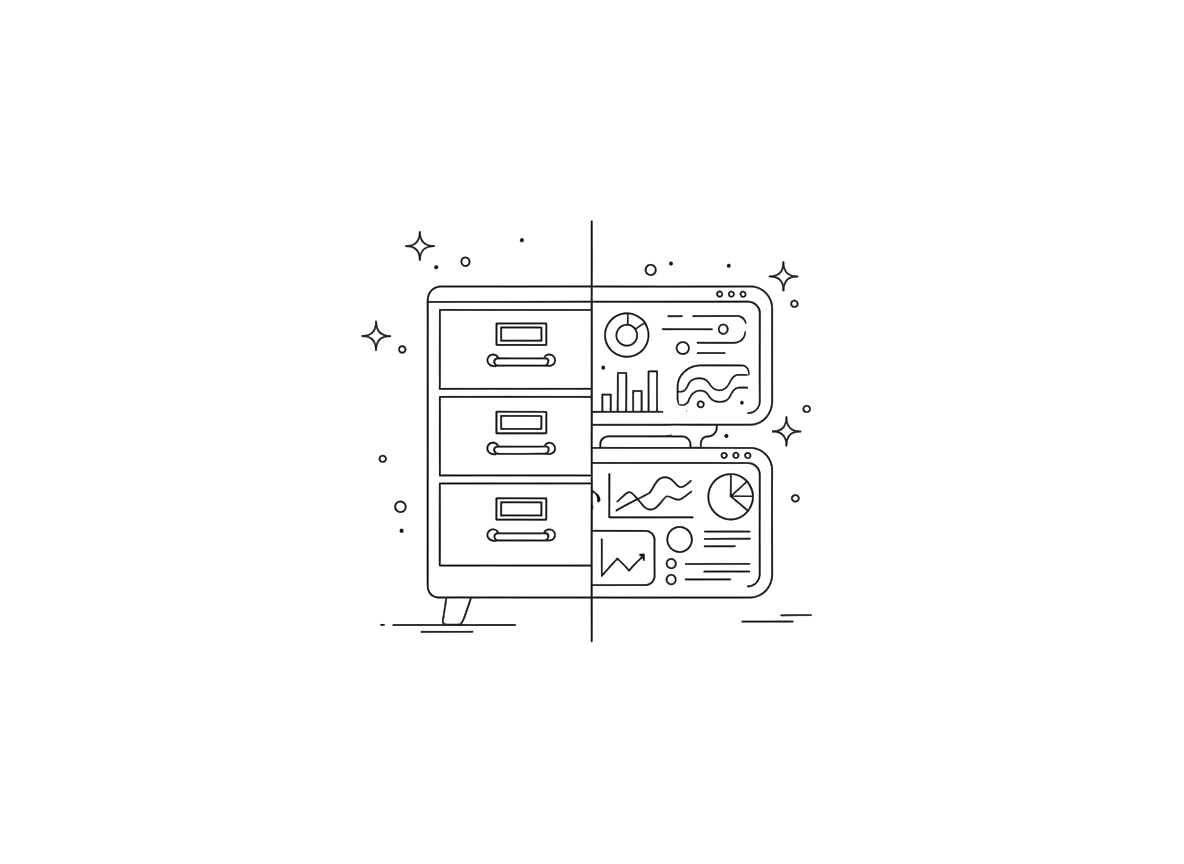
Traditional CRM refers to platforms that serve primarily as databases for customer information. They store contacts, track deals, log interactions, and generate reports based on the data that users manually enter. Workflow automation exists but operates on static rules. Analytics are retrospective, showing what happened without predicting what will happen next.
AI-powered CRM builds on this foundation by embedding artificial intelligence throughout the platform. Machine learning analyzes data to generate predictions, automate decisions, and surface insights. Natural language processing interprets communications. Computer vision can process documents and images. The system actively assists users rather than passively waiting for their input.
The distinction is not about one being digital and the other being manual. Both are software platforms. The difference is whether the platform simply records your business activity or actively helps you improve it.
Lead Management and Qualification
Traditional CRM
Leads are captured through forms, imports, or manual entry. Sales representatives or marketing teams assign lead scores based on predefined rules: a certain number of points for visiting the pricing page, additional points for matching the target industry, points deducted for certain disqualifying characteristics. These rules are set by administrators and remain static until someone manually updates them.
The limitations are significant. Rule-based scoring cannot account for the complex, nonlinear relationships between variables that actually predict conversion. It requires constant manual tuning as market conditions change. And it reflects the assumptions of whoever created the rules rather than the reality revealed by actual outcomes.
AI-Powered CRM
AI-powered CRM platforms use machine learning to score leads based on patterns discovered in your historical data. The model analyzes every available variable, including ones that humans would never think to combine, and continuously updates its scoring algorithm based on new outcomes.
The AI might discover that leads from a specific geographic region who engage with technical content within three days of their first visit and come from companies that recently raised funding convert at five times the average rate. No human rule-builder would create that combination, but the pattern is real and actionable.
Lead routing also becomes intelligent. Instead of round-robin assignment or basic territory rules, AI matches leads with the representatives most likely to close them based on historical performance with similar prospects.
Sales Forecasting
Traditional CRM
Traditional forecasting relies on deal stages and sales representative estimates. Each deal is assigned a stage, each stage carries a default probability, and the forecast multiplies deal values by their stage probabilities. Sales representatives may adjust these probabilities based on their judgment, but studies consistently show that subjective probability estimates are unreliable.
The result is forecasts that are optimistic by default and volatile over time. Managers apply their own judgment to adjust numbers downward, creating a forecasting process that is more art than science.
AI-Powered CRM
AI forecasting analyzes the actual signals within each deal rather than relying on stage assignments. Communication frequency, stakeholder engagement breadth, response times, sentiment trends, competitive mentions, and dozens of other variables feed into a model that predicts outcomes based on what actually happened in similar historical deals.
The AI forecast for a deal in “Proposal Sent” stage might be significantly higher or lower than the default stage probability depending on the specific signals present. A deal where the prospect responds quickly, involves multiple stakeholders, and shows positive sentiment will forecast higher than one where communication has stalled and only a single contact is engaged, even if both are nominally at the same stage.
This granular analysis produces forecasts that are substantially more accurate and stable, enabling better resource allocation, hiring decisions, and strategic planning.
Data Entry and Maintenance
Traditional CRM
Data quality in traditional CRM depends entirely on user discipline. Sales representatives must manually log calls, update deal records, enter meeting notes, and maintain contact information. Research consistently shows that CRM data quality degrades rapidly when it depends on manual entry. Critical details are forgotten, records go stale, and incomplete data undermines reporting and analytics.
Many organizations hire dedicated CRM administrators whose primary function is chasing down sales teams to complete their data entry. This is expensive, inefficient, and creates an adversarial dynamic between sales and operations.
AI-Powered CRM
AI automates data capture across communication channels. Emails are automatically logged and parsed. Phone calls are transcribed and summarized. Calendar events sync automatically. Contact and company information is enriched from external data sources. Social media interactions are captured. Website behavior is tracked.
The practical difference is transformative. CRM data becomes comprehensive and current without requiring manual effort. Sales representatives no longer view the CRM as an administrative burden because it delivers value to them rather than just extracting data from them. Every other AI feature benefits from the higher-quality data that automation provides.
Customer Communication and Engagement
Traditional CRM
Traditional CRM manages communication through templates, mail merges, and basic automation sequences. A welcome email goes out when a lead is created. A follow-up is scheduled three days later. The content is the same for every recipient in the campaign, with basic personalization limited to name and company fields.
Sequences follow a linear path regardless of how the recipient engages. Someone who reads every email receives the same follow-up as someone who has not opened a single message. Timing is based on fixed delays rather than individual engagement patterns.
AI-Powered CRM
AI transforms communication from a broadcast to a conversation. As detailed in our exploration of how AI is revolutionizing CRM, every aspect of customer communication can be optimized for the individual recipient.
Send times are personalized based on when each recipient is most likely to engage. Subject lines are selected based on what style resonates with each person. Content adapts based on demonstrated interests and engagement history. Sequences branch dynamically based on real-time behavior, sending different messages to openers versus non-openers, clickers versus non-clickers, and converters versus non-converters.
The result is communication that feels personal and relevant to each recipient while operating at enterprise scale.
Reporting and Analytics
Traditional CRM
Traditional CRM reporting shows what happened. Pipeline reports, activity summaries, conversion rates, revenue by period, and other standard reports provide a retrospective view of business performance. These reports are valuable but limited. They answer “what” questions but rarely “why” or “what next.”
Custom reporting often requires technical expertise or dedicated analysts to build. Real-time dashboards may exist but display current data without predictive context.
AI-Powered CRM
AI-powered analytics, backed by sophisticated data analytics capabilities, transform reporting from descriptive to prescriptive. Beyond showing what happened, the system explains why metrics moved in a particular direction and recommends specific actions to improve outcomes.
Anomaly detection alerts teams to unexpected changes before they become problems. A sudden drop in email engagement for a specific customer segment triggers an investigation rather than being discovered weeks later in a monthly report. A spike in support tickets from customers using a specific product version immediately surfaces as a potential product issue.
Predictive dashboards show where key metrics are headed based on current trends, enabling proactive adjustments rather than reactive responses. Revenue projections, churn forecasts, and pipeline health indicators all include forward-looking components that traditional reporting cannot provide.
Automation and Workflow
Traditional CRM
Automation in traditional CRM follows if-then rules. If a lead fills out a form, then send a welcome email. If a deal moves to a specific stage, then create a task for the account manager. If a support ticket has been open for 48 hours, then escalate to a manager. These rules are valuable but rigid. They cannot adapt to context, learn from outcomes, or handle the complexity of real business processes.
AI-Powered CRM
AI-powered automation adapts to each situation based on context and historical outcomes. The system determines not just what action to take but the optimal timing, channel, and content for that action. For businesses leveraging custom software development alongside their CRM, the automation possibilities expand further through tailored integrations.
When a high-value deal shows risk signals, the automation might schedule a call with a senior executive rather than sending a standard check-in email. When a customer’s usage pattern suggests they would benefit from an upgrade, the system might route them to a specific representative who has the highest conversion rate for upsell conversations with similar accounts. These decisions are made automatically based on data, not static rules.
Customer Retention and Churn Prevention
Traditional CRM
Traditional CRM tracks customer status and renewal dates. Account managers can set reminders to check in before renewals. Support ticket history provides some insight into customer satisfaction. But identifying which customers are at risk of leaving requires manual analysis and intuition.
By the time a customer contacts you to cancel, the opportunity for retention has already significantly diminished. Traditional CRM provides the data but leaves the pattern recognition to overextended account managers who may be responsible for hundreds of accounts.
AI-Powered CRM
Churn prediction models analyze the full spectrum of customer behavior to identify risk signals weeks or months before a customer decides to leave. Declining engagement, changing usage patterns, negative sentiment shifts, increasing support contacts, and reduced feature adoption all contribute to a risk score that updates in real time.
The system does not just identify risk. It triggers appropriate interventions automatically. High-value accounts at risk receive personal outreach from senior team members. At-risk accounts showing confusion-related signals receive targeted educational content. Accounts approaching renewal with declining engagement receive proactive retention offers tailored to their specific situation.
For a detailed look at the specific AI features that power these capabilities, our guide to the 10 AI CRM features your business needs covers each one in depth.
Implementation Considerations
Migration Complexity
Moving from a traditional CRM to an AI-powered platform requires data migration, workflow reconfiguration, integration updates, and team training. The complexity varies based on the volume of historical data, the number of integrations, and the extent of customization in your current system.
Plan for a transition period where both systems may need to operate in parallel. Data mapping should be thorough and tested before migration. Custom fields, workflows, and integrations all need equivalents in the new platform.
Cost Analysis
AI-powered CRM platforms typically carry higher subscription costs than traditional alternatives. However, the total cost comparison must account for the productivity gains, reduced manual labor, improved conversion rates, and higher customer retention that AI delivers. Most businesses find that the incremental cost is recovered within the first year through measurable performance improvements.
Team Readiness
The technology is only valuable if your team adopts it. Invest in comprehensive training that emphasizes the benefits to individual users, not just organizational metrics. Sales representatives need to see how AI saves them time and helps them close more deals. Managers need to understand how predictive analytics improve their decision-making. Executives need visibility into the strategic insights the platform provides.
Data Foundation
AI capabilities depend on data quality. If your current CRM data is incomplete, inconsistent, or outdated, address these issues as part of your migration plan. The good news is that AI-powered data capture features will prevent these problems from recurring once the system is operational.
Making the Decision
The question is not whether AI-powered CRM is better than traditional CRM. In virtually every functional area, the AI-powered approach delivers superior results. The question is whether the investment in transitioning is justified for your specific business situation.
If your sales team is small and your customer base is limited, the benefits of AI may not yet outweigh the cost and complexity of migration. But if you are scaling your sales operation, managing a growing customer base, competing in a market where personalization matters, or struggling with forecast accuracy and data quality, the case for upgrading is compelling.
The gap between AI-powered and traditional CRM capabilities is widening, not narrowing. Businesses that delay the transition will find themselves increasingly disadvantaged against competitors who have already made the switch.
Take the Next Step
Whether you are ready to upgrade now or want to understand what the transition would involve for your specific situation, we are here to help. Contact Camfirst Solutions for a detailed assessment of your current CRM infrastructure and a clear roadmap for implementing AI-powered capabilities that drive measurable business results.