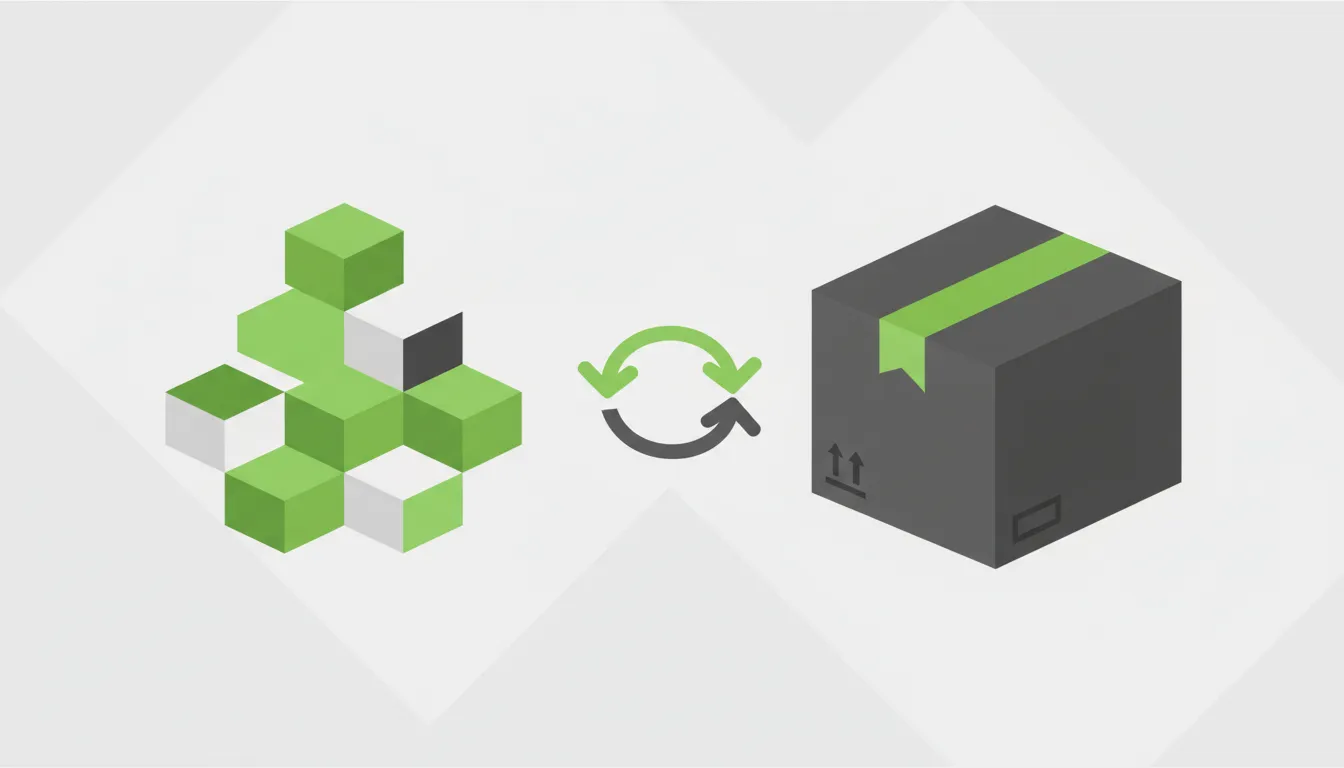
Every business reaches a point where existing tools no longer keep up with growth, complexity, or competitive pressure. When that moment arrives, the question becomes clear: should you invest in custom software development or purchase an off-the-shelf solution? At Camfirst Solutions, we help businesses evaluate this decision every day. The answer depends on your budget, timeline, operational needs, and long-term strategy. This guide breaks down the key factors so you can make a confident, well-informed decision.
What Is Custom Software?
Custom software is built from the ground up to meet the specific requirements of a single organization. A development team works closely with stakeholders to design, build, and deploy a solution that fits precisely into existing workflows, business rules, and growth plans.
Custom solutions can take many forms — internal dashboards, customer-facing portals, inventory management systems, or industry-specific platforms. The defining characteristic is that every feature exists because the business needs it, and nothing is included that does not serve a purpose.
What Are Off-the-Shelf Solutions?
Off-the-shelf software refers to pre-built products designed for a broad audience. These are commercially available tools such as Salesforce, QuickBooks, Shopify, or Microsoft Dynamics. They address common business functions and are ready to deploy with minimal configuration.
These products benefit from large development teams, established user communities, and years of iterative improvement. However, they are designed to serve the widest possible market, which means they may include features you do not need while lacking functionality that is critical to your operations.
Total Cost of Ownership Comparison
Upfront Costs
Off-the-shelf software typically wins on initial cost. Subscription fees or one-time license purchases are predictable, and deployment is fast. Custom software requires a larger upfront investment because you are funding the entire design and development process.
However, upfront cost alone is a misleading metric. The real question is what you pay over the full lifecycle of the solution.
Long-Term Costs
Off-the-shelf solutions carry ongoing subscription fees that compound year over year. As your user count grows or you need premium features, costs escalate — often unpredictably. Vendor price increases, per-seat licensing, and add-on modules can push the total cost well beyond initial estimates.
Custom software has higher initial development costs, but you own the product outright. There are no recurring license fees, no per-user charges, and no surprise price hikes. Maintenance and hosting costs exist, but they are under your control and can be optimized over time.
For businesses planning to operate a solution for five or more years, custom software frequently delivers a lower total cost of ownership despite the higher upfront investment.
Hidden Costs to Consider
- Training and onboarding — Off-the-shelf tools may require staff to adapt to the software rather than the software adapting to them
- Workaround labor — When a packaged solution does not fit your workflow, employees spend hours on manual workarounds
- Integration middleware — Connecting off-the-shelf tools to your existing systems often requires third-party connectors or custom API work
- Data migration — Switching vendors later means costly and risky data migration projects
Customization vs Speed to Market
Speed to Market
If time is your most pressing constraint, off-the-shelf software has a clear advantage. You can sign up, configure basic settings, and start using the tool within days or weeks. This speed is valuable for startups testing a concept, businesses responding to urgent operational needs, or teams that need a functional tool immediately.
Depth of Customization
Off-the-shelf products offer configuration options — themes, settings panels, workflow builders — but these operate within the boundaries the vendor has defined. When your requirements fall outside those boundaries, you hit a wall.
Custom software eliminates that wall entirely. Every screen, workflow, data model, and integration point is designed around your requirements. If your business operates in a niche industry, serves a specialized customer base, or follows non-standard processes, custom development ensures the software works the way your business works — not the other way around.
Working with a team experienced in web development and app development ensures that your custom solution is engineered for both performance and usability from the start.
Scalability
Scaling with Off-the-Shelf Software
Packaged solutions scale in predefined ways. You can add users, upgrade to higher-tier plans, or activate additional modules. This works well when your scaling needs align with what the vendor anticipated. But when they do not — when you need to handle a unique data structure at volume, support an unconventional user role, or process transactions in a way the vendor did not design for — you are stuck.
Vendor-imposed limits on API calls, storage, or concurrent users can also become bottlenecks as your business grows beyond the vendor’s target customer profile.
Scaling with Custom Software
Custom software scales on your terms. Your development team can optimize database queries, add server capacity, refactor architecture, or introduce caching layers based on your actual usage patterns. There are no artificial limits imposed by a vendor’s pricing tiers.
For businesses with aggressive growth plans or unpredictable demand spikes, this flexibility is not a luxury — it is a necessity.
Integration Capabilities
Modern businesses run on interconnected systems. Your software needs to communicate with accounting platforms, CRMs, payment gateways, shipping providers, analytics tools, and internal databases.
Off-the-Shelf Integrations
Popular packaged solutions offer pre-built integrations with other popular tools. If your entire technology stack consists of mainstream products, these integrations often work well. Problems arise when you use legacy systems, proprietary databases, or industry-specific platforms that the vendor has no incentive to support.
Custom Software Integrations
Custom software can be built to integrate with anything that has an API — and even systems that do not, through direct database connections, file-based data exchange, or custom middleware. This is particularly valuable for businesses that rely on a mix of modern SaaS tools and legacy systems that cannot be replaced.
If your business runs on a complex technology stack, a custom solution ensures every system talks to every other system without manual data entry or fragile workarounds. For businesses selling online, combining a custom ecommerce development approach with tailored integrations can create a seamless experience from storefront to fulfillment.
Security Considerations
Off-the-Shelf Security
Reputable vendors invest heavily in security — dedicated teams, regular audits, compliance certifications. For many businesses, this level of security exceeds what they could achieve independently.
However, off-the-shelf software is also a larger target. Because millions of businesses use the same product, a single vulnerability can be exploited at scale. You are also dependent on the vendor’s patch timeline and cannot implement custom security measures beyond what the platform allows.
Additionally, your data resides on the vendor’s infrastructure, subject to their data handling policies, jurisdiction, and the terms of their subprocessor agreements. For industries with strict data sovereignty or compliance requirements — healthcare, finance, government — this can be a disqualifying factor.
Custom Software Security
Custom software allows you to implement security measures tailored to your specific threat model — a critical advantage covered in detail in our cybersecurity guide for small businesses. You control where data is stored, how it is encrypted, who can access it, and how access is audited. You can build compliance requirements directly into the application architecture rather than relying on a vendor’s interpretation of regulations.
The trade-off is responsibility. You need a competent development and operations team to maintain security patches, monitor for vulnerabilities, and respond to incidents. This is a serious commitment, but for organizations handling sensitive data, it provides a level of control that off-the-shelf solutions cannot match.
Maintenance and Support
Maintaining Off-the-Shelf Software
The vendor handles updates, bug fixes, and infrastructure maintenance. This reduces your operational burden significantly. However, you are also subject to the vendor’s update schedule. Feature changes, UI redesigns, or deprecated functionality can disrupt your operations without warning. You have no control over the product roadmap.
Vendor lock-in is a real risk. If the vendor is acquired, changes pricing dramatically, discontinues the product, or pivots their strategy, you may be forced into a costly and disruptive migration on someone else’s timeline.
Maintaining Custom Software
With custom software, you control the maintenance schedule. Updates happen when they make sense for your business, not when a vendor pushes them. You decide which features to add, modify, or retire.
The responsibility for maintenance falls on your internal team or a trusted custom software development partner. This requires ongoing investment, but it also means the software continues to evolve in alignment with your business — not someone else’s product strategy.
Real-World Scenarios
When Off-the-Shelf Makes Sense
- A small marketing agency needs project management and time tracking. Tools like Asana or Monday.com provide exactly what is needed at a reasonable monthly cost. Building a custom project management tool would be unnecessary.
- A new ecommerce brand launching its first online store. Platforms like Shopify offer a proven, feature-rich foundation that gets you selling quickly without a large development investment.
- A growing company that needs standard HR and payroll functionality. Established platforms like Gusto or BambooHR handle these well-defined processes reliably.
When Custom Software Makes Sense
- A logistics company with a proprietary routing algorithm and driver management workflow that no off-the-shelf tool supports. Custom software turns their operational advantage into a technology advantage.
- A healthcare provider that needs a patient portal integrated with multiple EHR systems while meeting specific HIPAA compliance requirements that commercial platforms cannot guarantee.
- A manufacturing firm with a unique production workflow that requires real-time monitoring, custom reporting, and integration with IoT sensors on the factory floor. No packaged solution addresses this combination of needs.
- A financial services company that needs to process transactions according to proprietary business rules while maintaining audit trails that satisfy multiple regulatory frameworks.
A Decision Framework for Your Business
Use the following questions to guide your decision:
Choose Off-the-Shelf When:
- Your requirements are well-defined and common across your industry
- Speed to deployment is the top priority
- Your budget favors predictable monthly costs over large upfront investment
- The core workflows you need are standard and unlikely to change significantly
- You do not need deep integration with proprietary or legacy systems
Choose Custom Software When:
- Your business processes are unique and represent a competitive advantage
- Off-the-shelf tools require significant workarounds that drain productivity
- You need full control over data, security, and compliance
- Your long-term cost analysis favors ownership over subscription
- Integration with existing proprietary systems is critical
- You need the software to scale in ways that vendor-imposed limits cannot accommodate
Consider a Hybrid Approach
Many businesses benefit from a combination of both. Use off-the-shelf tools for standard functions like email, accounting, and basic CRM. Invest in custom development for the systems that directly support your core business differentiator. Understanding how AI is changing web development can also inform which components are worth building custom and which can leverage emerging AI-powered platforms.
For example, a company might use QuickBooks for accounting and Slack for communication while running a custom-built platform for their unique service delivery workflow. This approach balances cost efficiency with competitive advantage.
Making the Right Choice
The build-vs-buy decision is not about which option is universally better. It is about which option aligns with your business reality — your budget, your timeline, your growth trajectory, and the complexity of your operations.
If your needs are standard and well-served by existing products, off-the-shelf software delivers value quickly and affordably. If your business depends on processes that set you apart from competitors, custom software development transforms those processes into durable technology assets.
The most expensive mistake is not choosing the wrong option initially — it is failing to reassess as your business evolves. A tool that served you well at 10 employees may become a bottleneck at 100. A custom platform built for one market may need to be rearchitected for a new one.
Ready to Explore Custom Software for Your Business?
Whatever you choose, make the decision based on where your business is heading, not just where it is today. If your needs have outgrown off-the-shelf tools, our guide on the best web development frameworks in 2026 can help you understand the technologies behind modern custom solutions. At Camfirst Solutions, we deliver custom software development, expert web development, and scalable web app development that grows with your business. Contact us today for a free consultation and let us help you evaluate your options.