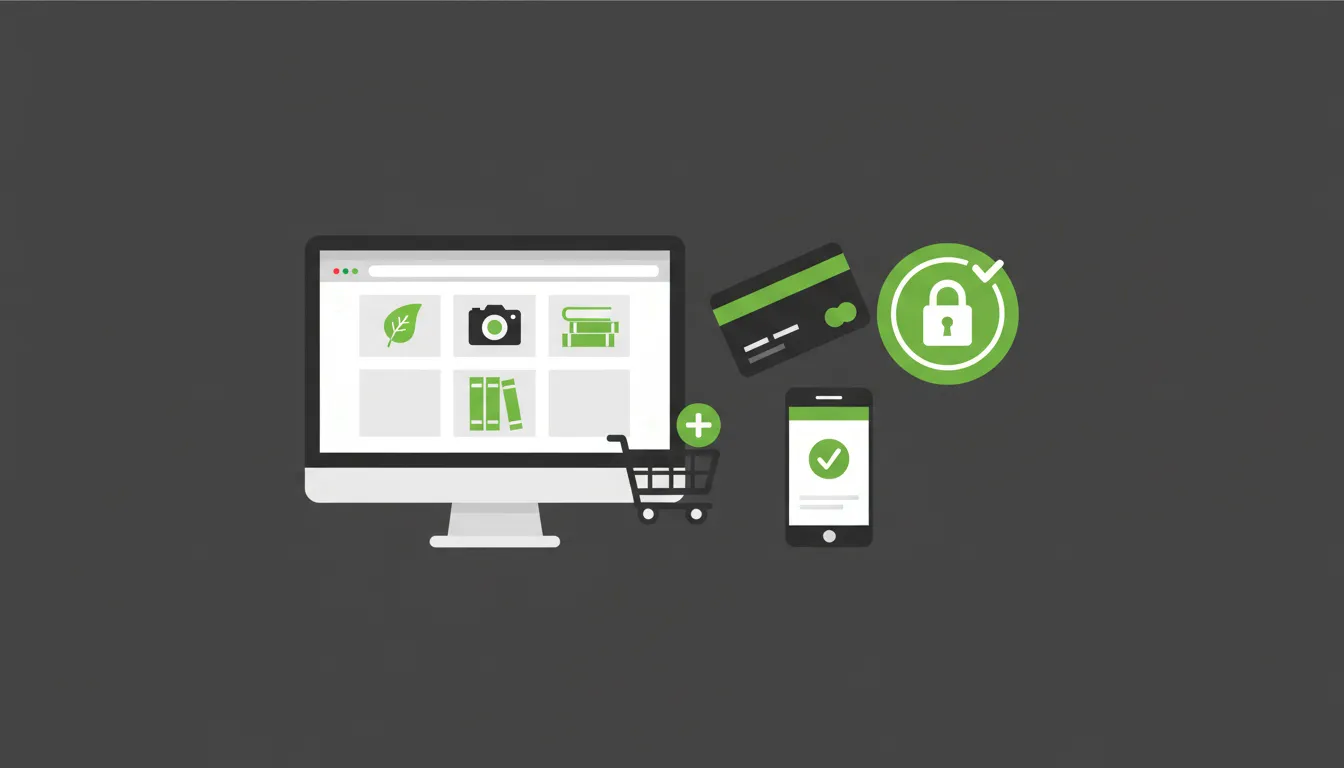
Selling online is no longer optional for small businesses — it is a fundamental revenue channel. Consumers expect to browse, compare, and purchase products digitally, and businesses without an online presence are leaving money on the table. The good news is that launching an e-commerce store has never been more accessible, and Camfirst Solutions helps small businesses do it well from day one. The challenge is doing it right.
This guide walks you through every stage of building and growing a small business online store, from choosing the right platform to scaling your operations as demand grows.
Why Small Businesses Need E-Commerce Now
The shift to online shopping has accelerated permanently. Small businesses that sell online benefit from:
- Expanded geographic reach beyond your local market
- 24/7 availability generating sales while you sleep
- Lower overhead costs compared to maintaining additional physical retail locations
- Rich customer data that informs smarter business decisions
- Competitive parity with larger retailers who have invested heavily in digital
Whether you sell handmade goods, professional services, specialty foods, or industrial supplies, an online store opens doors that a physical location alone cannot.
Choosing the Right E-Commerce Platform
Your platform decision affects everything — design flexibility, payment options, scalability, and ongoing costs. There is no single best platform; the right choice depends on your specific business needs.
Shopify
Shopify is the most popular hosted e-commerce platform for good reason. It handles hosting, security, and updates for you, letting you focus on selling rather than server management.
Best for: Small businesses that want to launch quickly with minimal technical complexity. Shopify’s app ecosystem covers nearly every feature you might need, from abandoned cart recovery to subscription billing. If you are considering Shopify, our step-by-step guide on how to set up a Shopify store walks you through the entire process.
Considerations: Monthly fees plus transaction fees can add up. Customization beyond themes requires Liquid templating knowledge or a developer. Our Shopify development services help businesses build custom Shopify stores that stand out from template-based competitors.
WooCommerce
WooCommerce is a free, open-source plugin that transforms any WordPress site into a full-featured online store. It offers unmatched flexibility for businesses that want complete control over their store.
Best for: Businesses already using WordPress, those who want deep customization, and stores with complex product configurations or unique checkout requirements.
Considerations: You are responsible for hosting, security, updates, and performance optimization. The plugin ecosystem is vast but quality varies. Professional WordPress development ensures your WooCommerce store is built on a solid, maintainable foundation.
Custom-Built Solutions
For businesses with requirements that off-the-shelf platforms cannot satisfy — complex B2B pricing rules, multi-vendor marketplaces, or integration with proprietary inventory systems — a custom e-commerce solution provides maximum flexibility.
Best for: Businesses with unique workflows, high transaction volumes, or specific integration requirements that would require extensive workarounds on standard platforms.
Considerations: Higher upfront investment and longer development timeline. Requires ongoing technical support for maintenance and updates.
When choosing a platform, consider your product catalog size, monthly budget for fees, integration needs with existing systems like ERP or POS, your team’s technical expertise, and your growth projections for the next two to three years. For a detailed comparison of the top options, see our best e-commerce platforms for 2026 guide.
Product Page Optimization
Your product pages are where buying decisions happen. A well-optimized product page provides all the information a customer needs to purchase with confidence while removing every possible source of friction.
Essential Product Page Elements
- High-quality images from multiple angles, with zoom capability and lifestyle context shots showing the product in use
- Detailed product descriptions that address both features and benefits — do not just list specifications; explain why they matter to the customer
- Clear pricing with any applicable discounts, bundle deals, or volume pricing displayed prominently
- Stock availability indicators that create urgency without being manipulative
- Size guides, material information, and care instructions where applicable
- Customer reviews and ratings providing social proof from previous buyers
- Related product recommendations to increase average order value
Writing Product Descriptions That Sell
Avoid copying manufacturer descriptions that appear on dozens of competing sites. Write unique descriptions that speak directly to your target customer. Address common questions and objections within the description itself. Use formatting — bullet points, bold text, and subheadings — to make descriptions scannable for shoppers who skim.
Payment Processing Setup
Accepting payments online requires a payment gateway, a merchant account (or an all-in-one processor), and a secure checkout flow. Getting this right is non-negotiable — a single bad experience at checkout can cost you a customer permanently.
Popular Payment Processors
- Stripe offers developer-friendly APIs, competitive rates, and support for a wide range of payment methods including credit cards, Apple Pay, Google Pay, and buy-now-pay-later options
- PayPal remains a trusted name that many customers prefer, particularly for first-time purchases from unfamiliar stores
- Square integrates well with point-of-sale systems for businesses that sell both online and in-store
Payment Best Practices
- Offer multiple payment methods to accommodate customer preferences
- Display accepted payment icons prominently during checkout
- Implement SSL certificates and PCI DSS compliance to protect customer data
- Enable guest checkout — forcing account creation before purchase is one of the top reasons for cart abandonment
- Show order totals including tax and shipping before the final confirmation step
Shipping and Fulfillment
Shipping is where many small businesses struggle. Customers expect fast, affordable, and transparent delivery, and meeting those expectations requires a well-planned fulfillment strategy.
Shipping Strategy Options
- Flat-rate shipping simplifies pricing and is easy for customers to understand
- Real-time carrier rates from USPS, UPS, FedEx, or DHL provide accurate pricing based on weight, dimensions, and destination
- Free shipping thresholds encourage larger orders — “Free shipping on orders over $75” is one of the most effective promotions in e-commerce
- Local pickup eliminates shipping costs entirely and serves customers in your area
As order volume grows, consider third-party logistics providers or fulfillment services that warehouse your products and ship on your behalf. Establish a consistent fulfillment process covering order confirmation, pick-and-pack, carrier handoff, tracking communication, and delivery follow-up.
Inventory Management
Accurate inventory tracking prevents overselling, stockouts, and the customer service headaches that follow. Even a small product catalog benefits from proper inventory management.
Inventory Management Fundamentals
- Sync inventory across all sales channels — your website, marketplace listings, and physical store should reflect the same stock levels in real time
- Set reorder alerts to notify you when stock reaches minimum thresholds
- Track inventory costs to maintain accurate profit margin calculations
- Manage product variants (sizes, colors, configurations) as individual SKUs with independent stock counts
- Conduct regular audits to reconcile physical inventory with digital records
For businesses selling on multiple platforms, an integrated inventory management system prevents the chaos of manual stock updates and reduces the risk of selling products you do not have.
Marketing Integration
An online store without marketing is a storefront on a deserted street. Integrating marketing tools into your e-commerce platform from day one positions you to drive traffic and convert visitors into customers.
Essential Marketing Integrations
- Google Analytics and conversion tracking to understand where your traffic comes from and what drives sales
- Facebook Pixel and social media tracking for retargeting campaigns that bring back visitors who browsed but did not purchase
- Google Merchant Center for product listing ads that appear in Google Shopping results
- Abandoned cart recovery automations that email customers who added items to their cart but left before completing checkout
- Referral and loyalty programs that reward repeat customers and incentivize word-of-mouth
A comprehensive digital marketing strategy amplifies every other investment you make in your online store. Without it, even the best-designed store will struggle to generate consistent traffic.
SEO for Product Pages
Search engine optimization is the most cost-effective long-term traffic source for e-commerce websites. When potential customers search for products you sell, your store should appear in the results.
On-Page SEO Essentials
- Unique title tags for every product page incorporating the product name and primary keyword
- Meta descriptions that include a compelling reason to click, not just a product summary
- Clean URL structures using descriptive slugs like
/products/organic-cotton-tshirtrather than/products/item-47392 - Structured data markup (schema.org Product type) that enables rich snippets showing price, availability, and ratings in search results
- Alt text on all product images describing the product for search engines and screen readers
- Internal linking between related products, category pages, and relevant blog content
Our SEO services help e-commerce businesses rank higher for the product searches that matter most to their bottom line.
Content Marketing for E-Commerce
A blog or resource section on your store drives organic traffic for informational queries that product pages alone cannot capture. Buying guides, comparison articles, how-to content, and industry news establish authority and funnel readers toward your products naturally.
Email Marketing for E-Commerce
Email remains the highest-ROI marketing channel for online stores. Building and nurturing an email list gives you a direct line to customers that no algorithm change can take away.
Key Email Campaigns
- Welcome series introducing new subscribers to your brand, best sellers, and unique value proposition
- Abandoned cart emails sent within hours of cart abandonment, often recovering 10-15% of lost sales
- Post-purchase follow-ups requesting reviews, suggesting complementary products, and providing usage tips
- Win-back campaigns re-engaging customers who have not purchased in a defined period
- Promotional emails announcing sales, new arrivals, and seasonal collections
Segment your email list by purchase history, browsing behavior, and engagement level to deliver relevant messages rather than generic blasts. Personalized emails consistently outperform one-size-fits-all campaigns.
Customer Service Tools
Customer service can make or break a small e-commerce business. Unlike large retailers, small businesses have the advantage of providing genuinely personal support — but only if they have the right tools in place.
Customer Service Essentials
- Live chat on your website for real-time assistance during browsing and checkout
- Help desk software that centralizes customer inquiries from email, chat, and social media into a single manageable queue
- Comprehensive FAQ pages that answer common questions about shipping, returns, sizing, and product care
- Clear return and refund policies displayed prominently — transparency builds trust and reduces pre-purchase anxiety
- Order tracking pages where customers can check delivery status without contacting support
Respond to customer inquiries quickly. For small businesses, speed and personal attention are competitive advantages that large retailers cannot easily replicate.
Scaling Your Online Store
A successful launch is only the beginning. As your store grows, you need to evolve your operations, technology, and strategy to handle increased demand without sacrificing quality.
Scaling Strategies
- Automate repetitive tasks — order processing, inventory updates, email campaigns, and reporting should run without manual intervention as volume increases
- Expand to additional sales channels including Amazon, Etsy, and social media shops — and consider why your e-commerce store needs a mobile app to reach customers on the go
- Optimize site performance as traffic grows — slow page loads directly reduce conversion rates
- Invest in paid advertising once you understand your customer acquisition costs
- Expand your product line based on customer feedback and sales data
- Upgrade your platform when your current solution can no longer support your traffic or feature requirements
Getting Started with Your Online Store
Launching an e-commerce store is one of the most impactful investments a small business can make. The key is starting with a solid foundation — the right platform, well-optimized product pages, reliable payment and shipping systems, and a marketing strategy that drives consistent traffic.
You do not need to build everything at once. Start with the essentials, launch, gather real customer data, and iterate. Every successful online store was built one improvement at a time.
At Camfirst Solutions, we help small businesses build e-commerce websites that are designed to sell — not just look good. From platform selection to marketing integration, we handle the technical work so you can focus on your products and your customers.
Ready to Start Selling Online?
Whether you need a Shopify storefront, a custom WooCommerce build, or a fully tailored e-commerce solution, our e-commerce solutions team handles the technical work so you can focus on your products and customers. Contact us to discuss your project and get a free consultation on the best approach for your business.