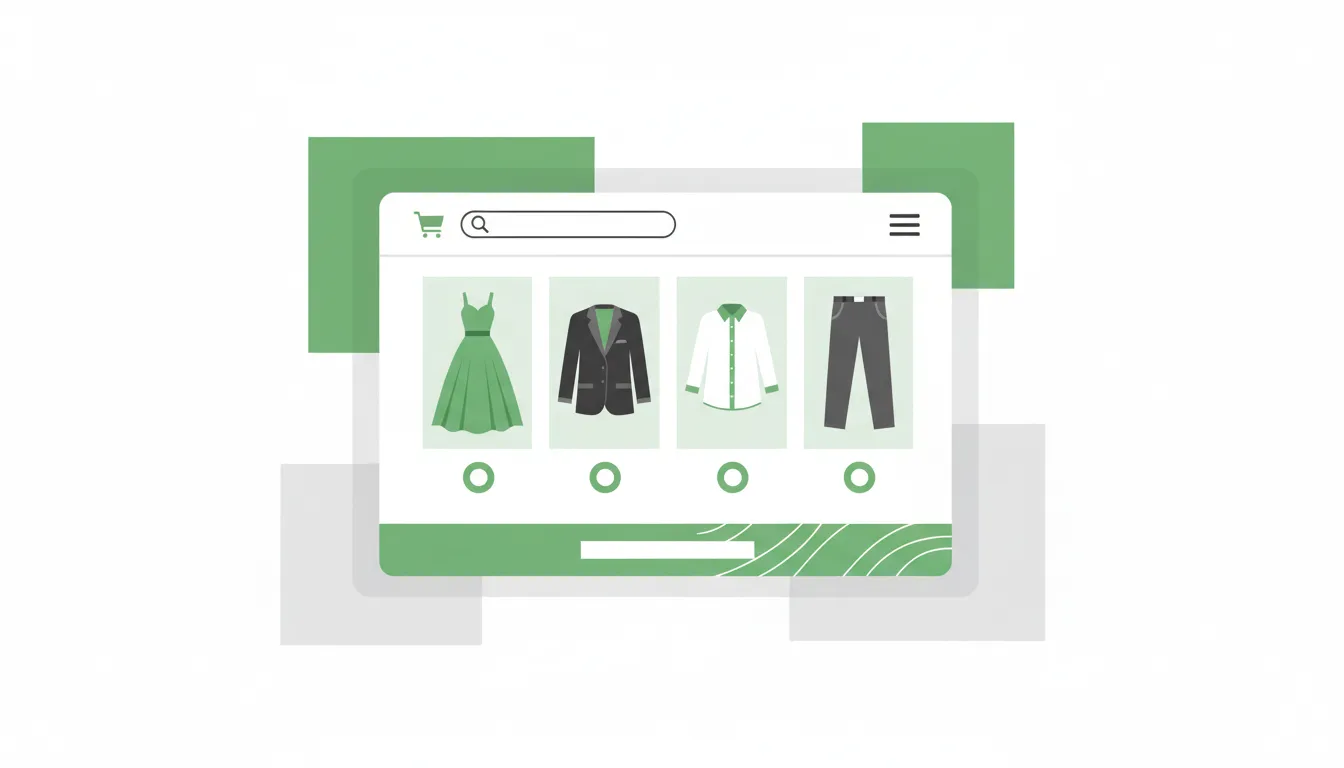
The global fashion e-commerce market continues to grow at a rapid pace, and consumers now expect polished, seamless online shopping experiences from every clothing brand they encounter. A well-designed fashion website does more than display products — it tells a brand story, builds trust, and guides shoppers effortlessly from browsing to checkout. In this guide from Camfirst Solutions, we break down the essential elements of a fashion e-commerce website that actually sells.
Visual-First Design: Let the Clothes Do the Talking
Fashion is inherently visual. Unlike software or consulting services, apparel must be seen, admired, and imagined on the buyer before a purchase decision is made. Your website design should reflect that reality at every turn.
- Full-width hero imagery — Use large, high-resolution lifestyle images on your homepage to set the mood and communicate your brand identity within seconds of a visitor arriving.
- Clean layouts with generous whitespace — Cluttered pages distract from the clothing itself. Give each product room to breathe with minimal text overlays and spacious grids.
- Consistent brand palette — Your colour scheme, typography, and visual language should remain consistent across every page, reinforcing brand recognition.
- Video backgrounds and motion — Short looping videos of models wearing your pieces can add depth and energy that static images alone cannot achieve.
A professional UI/UX design process ensures that visual appeal and usability work together rather than competing with each other.
Product Photography That Converts
In brick-and-mortar retail, customers can touch fabrics, try on garments, and inspect details up close. Online, your photography must compensate for every one of those lost senses.
Best Practices for Fashion Product Images
- Multiple angles — Show the front, back, side, and close-up details of every item. Five to eight images per product is a strong benchmark.
- On-model and flat-lay shots — On-model photography helps shoppers visualise fit and movement, while flat-lay images provide a clean reference for colour and pattern.
- Zoom functionality — Allow users to zoom into fabric textures, stitching, and hardware details without leaving the product page.
- Consistent lighting and backgrounds — Maintain uniform lighting and backdrop colours across your entire catalogue so the shopping experience feels cohesive.
- Video clips — A short video of a model walking or turning in a garment can communicate drape, fit, and fabric weight far better than any still image.
Investing in professional graphic design and photography direction pays for itself many times over in reduced return rates and higher conversion.
Size Guides and Fit Technology
One of the biggest barriers to buying clothing online is uncertainty about fit. Returns due to sizing issues erode margins and frustrate customers. Addressing this head-on is essential.
- Detailed size charts — Include measurements in both metric and imperial units. Provide bust, waist, hip, inseam, and shoulder measurements for every item, not just generic S/M/L labels.
- Fit descriptions — State whether a garment runs true to size, slim, relaxed, or oversized. A brief note such as “the model is 5’10” and wears a size M” provides valuable context.
- Virtual try-on tools — Augmented reality and AI-powered fit tools are becoming mainstream. These features let shoppers upload a photo or enter their measurements to see a personalised fit preview.
- Customer reviews with fit feedback — Encourage buyers to mention their height, weight, and the size they purchased in reviews. This peer data is often more trusted than brand-provided charts.
A thoughtful approach to sizing information directly reduces return rates and increases buyer confidence.
Advanced Filtering and Search
Fashion catalogues can run into hundreds or thousands of SKUs. If shoppers cannot find what they want quickly, they leave. Robust filtering and search functionality is non-negotiable.
Key Filtering Options
- Category — Dresses, tops, bottoms, outerwear, accessories
- Size — Allow multi-select so shoppers can filter by their size across categories
- Colour — Visual colour swatches are more intuitive than text labels
- Price range — A slider or predefined brackets let budget-conscious shoppers narrow results instantly
- Occasion — Casual, workwear, evening, activewear
- New arrivals and sale items — Dedicated filters for fresh stock and discounted pieces drive engagement
Your search bar should support natural-language queries, autocomplete suggestions, and tolerance for misspellings. A shopper who types “navy midi dress” should see relevant results immediately, not an empty page.
Lookbook and Editorial Pages
Lookbooks bridge the gap between a product catalogue and a fashion magazine. They showcase your pieces styled together in aspirational settings, inspiring shoppers and increasing average order value.
- Seasonal lookbooks — Create curated editorials for each new collection, featuring styled outfits in on-location photography.
- Shop-the-look functionality — Each image in the lookbook should link directly to the individual products shown, allowing shoppers to add items to their cart without navigating away.
- Blog and editorial content — Pair lookbooks with written content covering style tips, trend forecasts, and behind-the-scenes stories. This builds brand authority and supports SEO.
- Social proof integration — Embed user-generated content from Instagram or TikTok where real customers are wearing your pieces.
Lookbook pages keep visitors on your site longer, build emotional connection with your brand, and consistently outperform standard category pages in terms of engagement metrics.
Mobile Shopping Experience
More than 70 percent of fashion e-commerce traffic now comes from mobile devices. If your mobile experience is anything less than seamless, you are leaving revenue on the table.
- Responsive design — Your site must adapt flawlessly to every screen size, from compact smartphones to tablets.
- Thumb-friendly navigation — Place key actions like “Add to Cart,” filters, and the search bar within easy reach of a user’s thumb.
- Swipeable image galleries — Let mobile users swipe through product images with the same gesture they use on social media.
- Streamlined checkout — Minimise form fields, support autofill, and offer one-tap payment options like Apple Pay, Google Pay, and Shop Pay.
- Fast load times — Compress images, defer non-critical scripts, and use a content delivery network to keep page load times under three seconds on mobile connections. For practical techniques, see our guide on how to optimize images for web.
A dedicated mobile-first design approach, guided by experienced UI/UX designers, ensures that your highest-traffic channel is also your highest-converting one.
Payment Gateways and Checkout Optimisation
Cart abandonment rates in fashion e-commerce hover around 70 percent. A smooth, trustworthy checkout process is your most powerful weapon against lost sales.
- Multiple payment options — Support credit and debit cards, digital wallets (Apple Pay, Google Pay), buy-now-pay-later services (Klarna, Afterpay), and PayPal.
- Guest checkout — Never force account creation before purchase. Offer it as an optional step after the order is placed.
- Security indicators — Display SSL badges, payment provider logos, and trust seals prominently throughout the checkout flow.
- Currency and language localisation — If you sell internationally, detect the visitor’s location and display prices in their local currency.
- Order summary visibility — Keep a clear, itemised order summary visible at every stage of checkout so shoppers feel in control.
Our e-commerce solutions team integrates payment gateways that balance security, speed, and global reach.
Returns Policy as a Sales Tool
In fashion, a generous and transparent returns policy is not a cost centre — it is a conversion driver. Shoppers who are confident they can return an item that does not fit are significantly more likely to complete a purchase.
- Make the policy easy to find — Link to it in the site header, footer, product pages, and checkout flow. Never bury it.
- Use plain language — Avoid legal jargon. State the return window, condition requirements, and refund timeline in simple terms.
- Offer free returns when possible — Free return shipping removes the last major objection for hesitant buyers.
- Provide prepaid return labels — Include a return label in the shipment or make one downloadable from the customer’s order page.
- Automate the process — A self-service returns portal where customers can initiate returns, print labels, and track refund status reduces support load and improves satisfaction.
Brands that treat returns as part of the customer experience rather than an afterthought see higher lifetime customer value and stronger word-of-mouth referrals.
Influencer and Social Media Integration
Fashion and social media are inseparable. Your website should function as the commercial hub of a broader social ecosystem.
- Shoppable social feeds — Embed an Instagram or TikTok feed on your homepage or a dedicated page, with each post linking to the featured products.
- Influencer landing pages — Create custom pages for influencer collaborations with unique discount codes and curated product selections.
- Affiliate and referral programs — Build referral mechanics into your site so loyal customers and micro-influencers can earn rewards for driving sales.
- Social sharing buttons — Make it effortless for shoppers to share products and wishlists on their own social channels. For a complete approach to leveraging social platforms, read our social media marketing strategy guide.
- User-generated content galleries — Dedicate a section of your site to photos and videos submitted by real customers, building authenticity and community.
Integrating social proof directly into your product pages can increase conversion rates by up to 30 percent, according to industry benchmarks.
Seasonal Collections and Merchandising
Fashion operates on a seasonal calendar, and your website should reflect that rhythm.
- Collection launch pages — Build dedicated landing pages for each new season or capsule collection, complete with hero imagery, lookbook content, and direct shopping links.
- Countdown timers and pre-orders — Generate anticipation for upcoming drops with countdown timers and pre-order functionality.
- Dynamic merchandising — Use data to surface trending products, bestsellers, and recently viewed items on the homepage and category pages.
- Sale and clearance organisation — When transitioning between seasons, make it easy for bargain hunters to find discounted outgoing stock without cluttering your new arrivals.
- Email capture for launches — Offer early access or exclusive discounts to email subscribers for new collection launches, building your owned audience.
A well-executed seasonal strategy keeps your website feeling fresh and gives returning visitors a reason to come back regularly.
Building on the Right Platform
The technical foundation of your fashion e-commerce site matters as much as the visual design. Platforms like Shopify offer robust, fashion-friendly features out of the box, including variant management, inventory tracking, and a rich ecosystem of design themes and apps.
Our Shopify development services help fashion brands launch stores that are beautiful, fast, and built to scale. For a broader look at your platform options, see our guide to the best e-commerce platforms for 2026. For brands with more complex requirements — multi-region catalogues, custom configurators, or advanced loyalty programmes — a fully custom build may be the better path.
Ready to Launch a Fashion Store That Converts?
A successful fashion e-commerce website is the product of thoughtful design, strong photography, smart technology choices, and a deep understanding of how your customers shop. Every element — from the homepage hero image to the returns policy page — either moves a visitor closer to a purchase or pushes them away.
At Camfirst Solutions, we combine stunning visual design with SEO and technical performance to build e-commerce websites that convert browsers into loyal customers. Whether you are launching a new fashion brand or reimagining an existing online store, our team is ready to help. Contact us today to discuss your fashion e-commerce project and start building a store your customers will love.