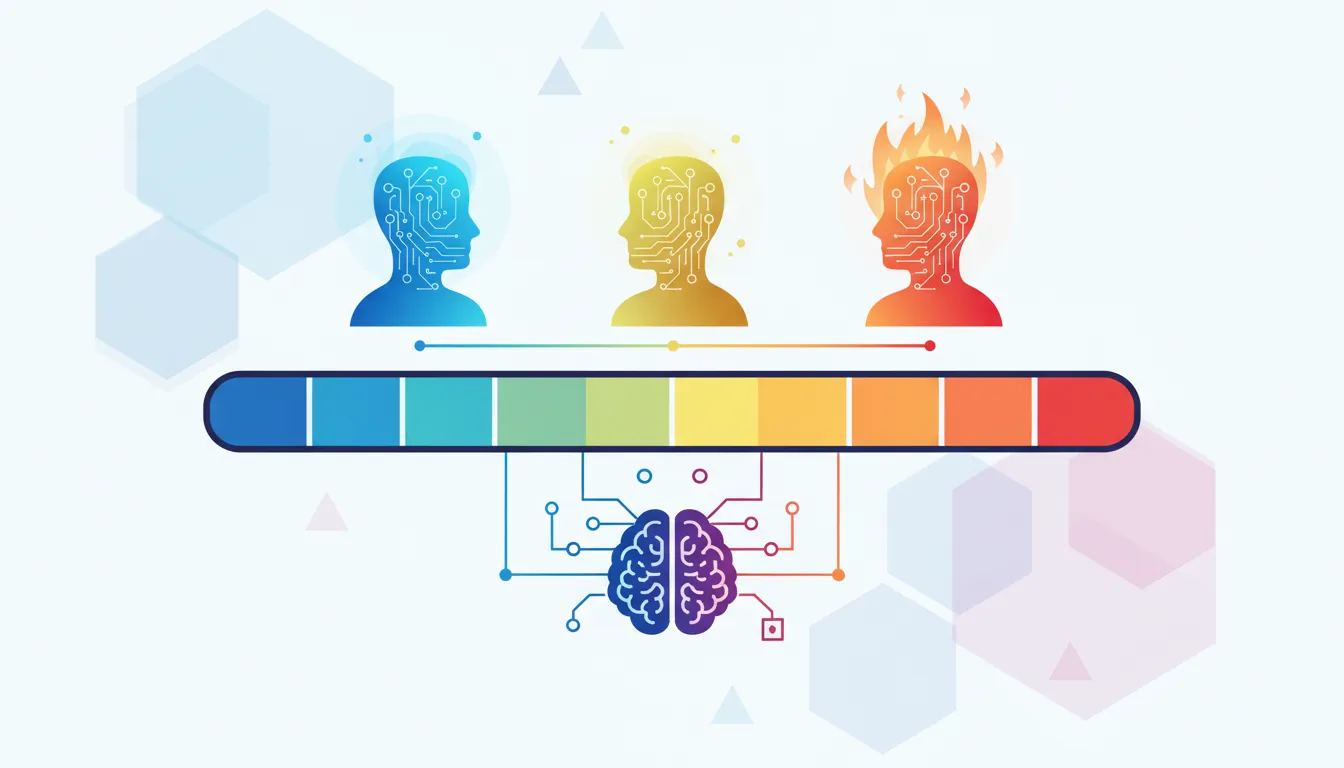
Every sales team faces the same challenge: too many leads and not enough time to pursue all of them. When reps spend hours chasing prospects who will never convert, revenue suffers and morale drops. Traditional lead scoring methods — based on gut instinct or simple demographic filters — leave money on the table. AI lead scoring changes the equation entirely. By analyzing hundreds of data points in real time, artificial intelligence identifies which prospects are most likely to buy, allowing your team to focus where it matters most. At Camfirst Solutions, we help businesses implement AI-powered lead generation systems that transform how sales teams prioritize, engage, and close deals.
What Is AI Lead Scoring?
AI lead scoring is the process of using machine learning algorithms to evaluate and rank prospects based on their likelihood to convert into paying customers. Unlike traditional scoring models that rely on manually assigned point values, AI lead scoring continuously learns from historical data, behavioral signals, and engagement patterns to produce dynamic, accurate scores.
A traditional lead scoring model might assign ten points for a job title match and five points for opening an email. AI lead scoring goes far deeper. It analyzes hundreds of variables simultaneously — website behavior, email engagement frequency, content consumption patterns, social media activity, firmographic data, and purchase history — to identify patterns that human analysts would miss entirely.
The result is a scoring system that improves over time. As the algorithm processes more data, it refines its predictions, adapting to changes in buyer behavior and market conditions without manual intervention.
Why Traditional Lead Scoring Falls Short
Traditional lead scoring was a significant improvement over no scoring at all. However, it has inherent limitations that become more apparent as businesses scale.
Manual scoring models are static. Once you assign point values to specific criteria, those values remain the same until someone manually updates them. Markets shift, buyer preferences evolve, and new engagement channels emerge — but your scoring model stays frozen in time.
Human bias is another problem. Sales managers build scoring criteria based on their assumptions about what makes a good lead. Those assumptions may reflect past experience rather than current reality. A job title that signaled high intent three years ago might not carry the same weight today.
Traditional models also struggle with complexity. When you have dozens of data points to evaluate, it becomes nearly impossible for a human to assign accurate weights to each variable. AI handles this complexity naturally, processing vast datasets and discovering non-obvious correlations that drive conversion.
Finally, traditional scoring treats all leads as if they follow the same path. In reality, different buyer personas exhibit different behaviors. AI can identify multiple conversion patterns and score leads accordingly, rather than forcing every prospect through a single evaluation framework.
How AI Lead Scoring Works in Practice
Implementing AI lead scoring involves several key stages, each building on the last to create a system that improves continuously.
Data Collection and Integration
The first step is consolidating data from every touchpoint in your sales and marketing ecosystem. This includes your CRM, email marketing platform, website analytics, social media channels, advertising platforms, and any other systems that capture prospect interactions. An AI-powered CRM serves as the central hub, aggregating data streams into a unified view of each prospect.
The quality and breadth of your data directly impact the accuracy of your scoring model. The more touchpoints you track, the more signals the algorithm can use to distinguish high-intent prospects from casual browsers.
Model Training
With historical data in place, the AI model is trained to identify patterns that correlate with successful conversions. The algorithm examines past deals — both won and lost — and identifies which combinations of behaviors, demographics, and engagement signals predicted the outcome.
This training phase is where AI separates itself from traditional methods. Instead of relying on a sales manager’s intuition about what matters, the algorithm discovers what actually matters based on real outcomes.
Real-Time Scoring
Once trained, the model scores new leads as they enter your pipeline. Every interaction updates the score in real time. A prospect who downloads a pricing guide, visits the case studies page, and opens three consecutive emails receives a rapidly increasing score — alerting sales reps that this lead is warming up.
Conversely, a lead that goes quiet after initial engagement sees their score decrease, signaling that follow-up may need a different approach or that resources should be redirected to more active prospects.
Continuous Learning
AI lead scoring is not a set-it-and-forget-it system. As new deals close — or fail to close — the model incorporates those outcomes into its calculations. Seasonal trends, market shifts, and changes in your product offering are all reflected in updated scoring criteria. This self-improving nature is what makes AI scoring exponentially more valuable over time compared to static models.
Key Benefits of AI Lead Scoring for Sales Teams
Higher Conversion Rates
The most immediate benefit is improved conversion rates. When sales reps focus on leads with the highest scores, they spend their time on prospects who are genuinely ready to engage. Studies consistently show that companies using AI lead scoring see conversion rate improvements of 20 to 50 percent compared to traditional methods.
This is not about working harder — it is about working smarter. The same sales team, with the same number of hours in the day, produces more revenue simply by prioritizing the right opportunities.
Shorter Sales Cycles
High-scoring leads tend to move through the pipeline faster because they have already demonstrated intent through their behavior. When a rep reaches out to a prospect who has been actively researching solutions, the conversation starts at a more advanced stage. There is less need for educational content and more opportunity to discuss specific solutions and pricing.
For many businesses that partner with Camfirst Solutions, implementing AI lead scoring reduces average sales cycle length by 15 to 30 percent.
Better Sales and Marketing Alignment
AI lead scoring creates a shared language between sales and marketing teams. Instead of arguing about lead quality, both teams can reference objective scores backed by data. Marketing can optimize campaigns to attract higher-scoring leads, while sales can provide feedback on which scored leads actually converted — creating a feedback loop that benefits everyone.
This alignment eliminates one of the most common sources of friction in B2B organizations. When marketing sends leads that sales actually wants to call, both teams become more productive and more satisfied with their collaboration.
Reduced Customer Acquisition Cost
By focusing resources on high-probability prospects, companies reduce the cost of acquiring each customer. Fewer hours are wasted on dead-end leads, fewer marketing dollars are spent nurturing prospects who will never convert, and the overall efficiency of the revenue engine improves.
Leveraging AI data analytics alongside lead scoring amplifies this effect. Analytics reveal which channels produce the highest-scoring leads, allowing you to allocate budget toward the most productive sources and cut spending on underperforming channels.
Improved Forecasting Accuracy
When every lead in your pipeline carries a data-driven probability score, forecasting becomes far more reliable. Sales managers can aggregate scores across the pipeline to predict monthly or quarterly revenue with greater confidence. This improved visibility supports better resource planning, hiring decisions, and strategic investments.
AI Lead Scoring Models and Approaches
There are several approaches to AI lead scoring, and the best choice depends on your data, sales process, and business model.
Predictive Scoring
Predictive scoring uses machine learning to analyze historical conversion data and build a model that predicts future outcomes. This is the most common approach and works well for businesses with a substantial volume of historical deals.
Behavioral Scoring
Behavioral scoring focuses specifically on prospect actions — pages visited, content downloaded, emails opened, webinars attended. This approach is particularly effective for businesses with long, complex sales cycles where engagement patterns are strong indicators of intent.
Fit Scoring
Fit scoring evaluates how well a prospect matches your ideal customer profile based on firmographic and demographic data. Company size, industry, revenue, geographic location, and technology stack are all factors that contribute to fit scores.
Combined Scoring
The most powerful approach combines all three methods. A prospect with a strong fit score, high behavioral engagement, and a favorable predictive score represents the highest-priority opportunity. AI excels at combining these dimensions into a single, actionable score that reps can trust.
Implementing AI Lead Scoring: A Step-by-Step Approach
Step 1: Audit Your Data
Before implementing any AI system, evaluate the quality and completeness of your data. Identify gaps in tracking, inconsistencies in CRM records, and any silos where valuable data is trapped in disconnected systems.
Step 2: Define Your Ideal Customer Profile
Work with sales and marketing leadership to document the characteristics of your best customers. This profile serves as a baseline for the AI model, helping it understand what a high-value prospect looks like.
Step 3: Select the Right Technology
Choose an AI lead scoring solution that integrates with your existing tech stack. Whether you use Salesforce, HubSpot, or a custom CRM, the scoring tool must pull data from and push scores back to the systems your reps use daily. If you are exploring AI-powered CRM options, our team specializes in AI-powered CRM implementations designed to support intelligent scoring.
Step 4: Train and Validate the Model
Use historical data to train the model, then validate its predictions against known outcomes. Compare AI scores with actual deal results to ensure the model is accurate before rolling it out to the full team.
Step 5: Roll Out Gradually
Start with a pilot group of sales reps who can test the scoring system and provide feedback. Use their input to refine the model and the workflows around it before expanding to the entire organization.
Step 6: Monitor and Optimize
Track conversion rates, sales cycle length, and customer acquisition cost before and after implementation. Use these metrics to quantify the impact of AI scoring and identify areas for further optimization.
Common Mistakes to Avoid
Relying on Too Little Data
AI lead scoring requires a meaningful volume of historical data to produce accurate results. If your CRM has only a few hundred closed deals, the model may not have enough information to identify reliable patterns. In this case, start with a simpler model and expand as your data grows.
Ignoring the Human Element
AI scoring is a tool to support sales reps, not replace their judgment. The best results come when reps use scores as a starting point and layer in their own knowledge of specific accounts and relationships. Encourage reps to provide feedback on scores so the model can improve.
Failing to Update the Model
Even self-learning models benefit from periodic review. Market conditions change, new competitors enter the space, and your product evolves. Schedule regular reviews of your scoring model to ensure it reflects current reality.
Not Integrating Across Systems
AI scoring is only as good as the data it receives. If your website analytics, email platform, and CRM are not integrated, the model is working with an incomplete picture. Invest in proper AI lead generation infrastructure to ensure all data flows into your scoring system seamlessly.
Real-World Results: What Businesses Are Seeing
Companies across industries are reporting significant improvements after implementing AI lead scoring. B2B technology firms have seen conversion rates increase by 35 percent while simultaneously reducing the time reps spend on unqualified leads by 40 percent. Professional services companies have shortened their average sales cycle by three weeks. E-commerce businesses using AI scoring for their high-value B2B accounts have improved deal sizes by 25 percent by identifying upsell opportunities earlier in the process.
These results are not outliers. They reflect the natural outcome of replacing guesswork with data-driven prioritization. When you know which leads deserve attention, every activity your sales team undertakes produces more value.
For a deeper look at lead generation strategies powered by AI, read our guide on AI lead generation strategies for 2026. If you want to understand how AI is transforming CRM platforms beyond scoring, explore our article on how AI is revolutionizing CRM.
Is AI Lead Scoring Right for Your Business?
AI lead scoring delivers the most value for businesses that meet a few key criteria. You need a sufficient volume of leads flowing into your pipeline — typically at least several hundred per month — to generate the data the model needs. You need a CRM or data platform capable of capturing and organizing interaction data. And you need a sales team that is willing to adopt a data-driven approach to prioritization.
If you are still managing leads with spreadsheets or basic CRM filters, AI scoring represents a transformative upgrade. If you already use a simple scoring model, AI takes you from good to exceptional by uncovering insights that manual models cannot.
Take the Next Step Toward Smarter Sales
AI lead scoring is no longer a luxury reserved for enterprise organizations with massive budgets. The technology is accessible, the implementation process is well-established, and the ROI is proven. If your sales team is spending too much time on low-quality leads and not enough time closing deals, AI lead scoring is the most impactful change you can make.
At Camfirst Solutions, we help businesses design and implement AI lead scoring systems that integrate seamlessly with existing CRM platforms and sales workflows. Our team handles everything from data auditing to model training to ongoing optimization, so you see results without disrupting your operations.
Ready to transform how your sales team prioritizes leads? Contact us today to schedule a consultation and discover how AI lead scoring can drive measurable improvements in your conversion rates.