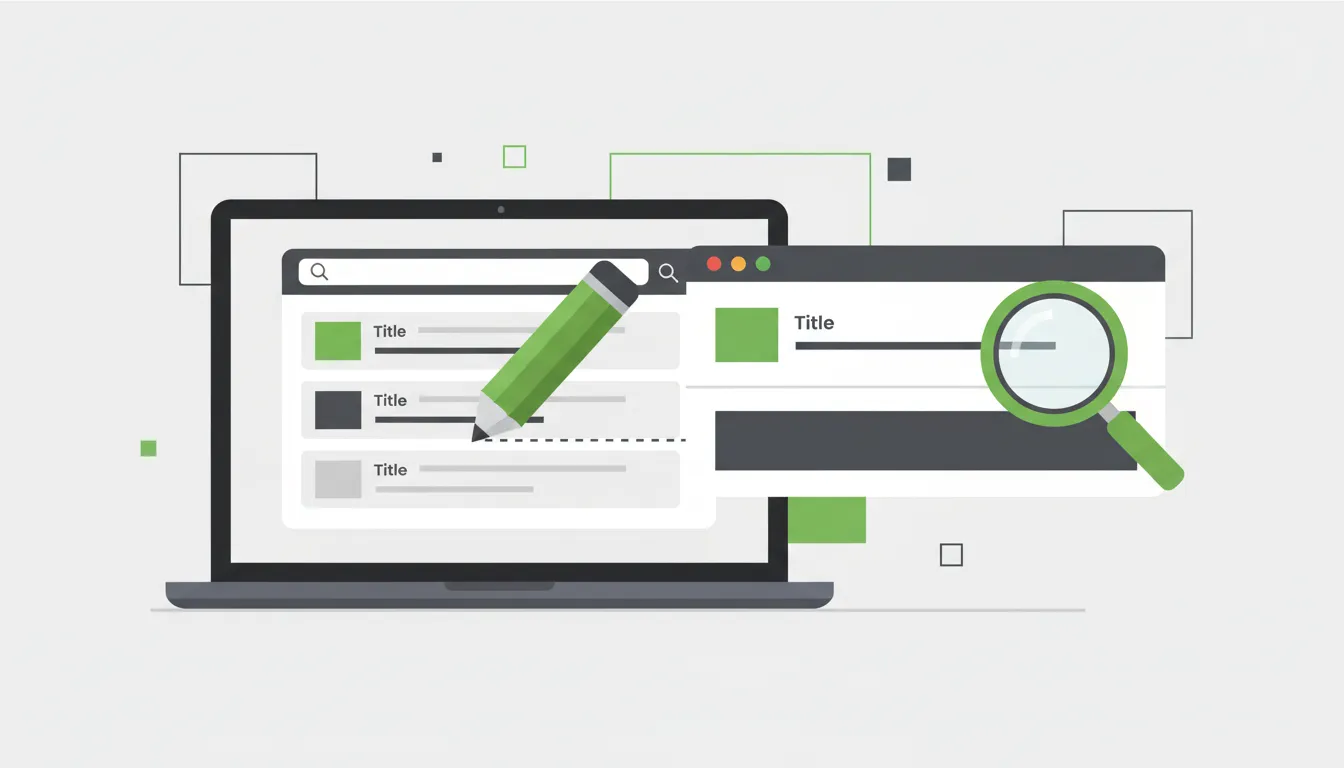
At Camfirst Solutions, we regularly see high-ranking pages lose traffic simply because of poorly written meta descriptions. Your page could rank in the top three results on Google and still lose traffic to competitors with better meta descriptions. The meta description is the short summary that appears beneath your page title in search engine results. It does not directly influence rankings, but it has a significant impact on whether people actually click through to your site. A well-written meta description acts as a miniature advertisement for your page, convincing searchers that your content is exactly what they are looking for.
This guide covers everything you need to know about writing meta descriptions that earn clicks, from understanding character limits to crafting descriptions for different page types and measuring their effectiveness.
What Is a Meta Description and Why Does It Matter?
A meta description is an HTML meta tag that provides a brief summary of a web page’s content. It appears in search engine results pages (SERPs) directly below the clickable title link and the URL. Here is what the HTML looks like:
<meta name="description" content="Learn how to write meta descriptions that increase click-through rates. Includes examples, best practices, and common mistakes to avoid." />While Google has confirmed that meta descriptions are not a direct ranking factor, they play a critical role in click-through rate (CTR). A higher CTR means more visitors from the same ranking position, effectively multiplying the value of your existing SEO work. Google also sometimes uses CTR as a signal for evaluating result quality, meaning a strong meta description can indirectly support your rankings over time.
When you leave the meta description empty or write a poor one, Google will auto-generate a snippet by pulling text from your page. These auto-generated snippets are often disjointed, lack persuasive intent, and fail to convey the value of your content. Taking control of your meta descriptions ensures that your search listings communicate exactly what you want.
Our SEO services team audits and optimizes meta descriptions across every page of your site to maximize organic click-through rates.
Character Limits: How Long Should a Meta Description Be?
Google does not enforce a strict character limit for meta descriptions, but it does truncate them in search results based on pixel width. As a practical guideline:
- Aim for 150 to 160 characters for desktop search results
- Keep mobile in mind: Google may display shorter snippets on mobile devices, so place the most important information within the first 120 characters
- Never go below 70 characters: Descriptions that are too short waste valuable SERP real estate and may signal thin content
The key principle is front-loading. Put your most compelling message and primary keyword near the beginning of the description. If Google truncates the end, you want the critical information to remain visible.
What Happens If You Exceed the Limit?
If your meta description exceeds roughly 160 characters, Google will cut it off with an ellipsis. This is not catastrophic, but it means your closing call to action or final selling point may never be seen. Write with the assumption that only the first 150 characters are guaranteed to display.
Keyword Placement in Meta Descriptions
When a user’s search query matches words in your meta description, Google bolds those words in the search results. This visual emphasis draws the eye and signals relevance, making the searcher more likely to click.
Best Practices for Keyword Integration
- Include your primary keyword naturally: The description should read as a coherent sentence, not a list of keywords. “Learn how to write meta descriptions that boost your click-through rate” is far better than “meta descriptions, write meta descriptions, meta description tips.”
- Use secondary keywords when they fit: If you can include a related term without forcing it, do so. This increases the chances of matching varied search queries.
- Place the primary keyword in the first half: Since truncation may hide the second half of your description, early placement ensures the keyword is always visible and bolded. For a deeper dive into keyword selection, see our guide on how to do keyword research for free.
- Avoid keyword stuffing: Repeating the same keyword multiple times looks spammy in search results and reduces trust. One or two natural inclusions are sufficient.
Writing Action-Oriented Meta Descriptions
The most effective meta descriptions prompt the searcher to take action. They answer the implicit question every searcher has: “Why should I click this result instead of the others?”
Use Strong Action Verbs
Start your meta description with a verb or include one early. Action verbs create momentum and tell the searcher exactly what they will get:
- “Learn how to…”
- “Discover the strategies…”
- “Find out why…”
- “Get step-by-step instructions for…”
- “Compare the top options for…”
Highlight the Value Proposition
Tell the searcher what specific benefit they will receive from clicking. Vague descriptions like “Read our article about SEO” give the searcher no reason to choose your result. Instead, specify the outcome:
- “Learn 8 proven techniques to double your organic click-through rate in 30 days.”
- “Compare pricing, features, and performance across the top 5 email marketing platforms.”
- “Get a free checklist for auditing your site’s technical SEO issues.”
Create Urgency When Appropriate
For time-sensitive content, product pages, or promotional landing pages, urgency can increase CTR. Phrases like “updated for 2026,” “limited availability,” or “before your competitors do” add a reason to click now rather than later. Use this technique sparingly and only when the urgency is genuine.
Our content writing team specializes in crafting persuasive copy that converts searchers into visitors and visitors into customers. For a broader look at writing that supports SEO, read our guide on content writing for SEO.
Writing Unique Descriptions for Every Page
One of the most common meta description mistakes is using the same description across multiple pages, or worse, leaving them all blank and relying on auto-generation. Every page on your site serves a different purpose and targets different keywords, so every page deserves a unique meta description.
Why Duplicate Descriptions Hurt Performance
- Missed targeting opportunities: Each page ranks for different queries. A generic description cannot effectively speak to all of them.
- Reduced CTR: When multiple pages from your site appear in search results with identical descriptions, it looks like duplicate content and erodes trust.
- Wasted crawl signals: Google may flag duplicate meta descriptions in Search Console as an issue, indicating that your site lacks proper on-page optimization.
Prioritizing Which Pages to Optimize First
If your site has hundreds or thousands of pages, optimizing every meta description at once may not be practical. Start with the pages that will deliver the greatest impact:
- Homepage: This is often the highest-traffic entry point and the page most likely to appear in branded searches.
- Service and product pages: These pages drive revenue and should have the most persuasive descriptions.
- Top-ranking blog posts: Pages that already rank well but have mediocre CTR represent the biggest opportunity for quick wins.
- Category and landing pages: These pages often appear in search results for high-volume, competitive keywords.
A comprehensive digital marketing strategy includes systematic meta description optimization as part of ongoing on-page SEO work. For more techniques to improve your organic visibility, explore our top SEO tips to boost rankings.
Meta Description Examples by Page Type
Different types of pages call for different approaches to meta descriptions. Here are examples for the most common page types.
Homepage
The homepage description should communicate what your business does and who it serves:
“Camfirst Solutions delivers custom web development, SEO, and digital marketing services for businesses ready to grow online. Get a free consultation today.”
This description identifies the company, lists core services, defines the audience, and includes a call to action, all within 160 characters.
Service Page
Service page descriptions should focus on the specific service and its primary benefit:
“Professional SEO services that increase your organic traffic and search rankings. Custom strategies backed by data, transparent reporting, and measurable results.”
Blog Post
Blog post descriptions should promise specific, actionable information:
“Learn 7 proven link-building strategies that work in 2026. Step-by-step instructions with real examples, no black-hat tactics or outdated advice.”
Product Page
Product page descriptions should highlight key features, pricing, or differentiators:
“Shop the AirComfort Pro ergonomic office chair. Adjustable lumbar support, breathable mesh, and 10-year warranty. Free shipping on orders over $200.”
Local Business Page
Local business descriptions should include the service area and a local trust signal:
“Trusted web development agency serving businesses in Sydney and Melbourne. Over 200 projects delivered since 2018. Book a free strategy call today.”
Category or Collection Page
Category descriptions should describe the range of options available:
“Browse our full collection of responsive website templates for restaurants, retail, healthcare, and professional services. All templates include mobile optimization and SEO setup.”
Common Meta Description Mistakes to Avoid
Understanding what not to do is just as important as knowing best practices. These are the mistakes we see most frequently when auditing client websites:
Leaving Meta Descriptions Blank
When you do not provide a meta description, Google generates one by pulling text from your page. This auto-generated snippet may not include your target keyword, may cut off mid-sentence, and almost certainly will not contain a call to action. Always write a custom description.
Stuffing Keywords
Repeating your keyword three or four times in a 160-character description makes it obvious that the text was written for search engines rather than for people. Searchers scroll past results that feel manipulative.
Being Too Vague
Descriptions like “We offer the best services. Contact us to learn more.” tell the searcher nothing specific. Every competitor could write the same thing. Be concrete about what makes your page valuable.
Using the Same Description for Similar Pages
Even pages that cover related topics should have distinct descriptions that reflect their unique content. “Our guide to on-page SEO” and “Our guide to technical SEO” are different pages with different value propositions.
Including Quotation Marks
Google sometimes truncates meta descriptions at quotation marks. If you need to use them, use single quotes or HTML entities instead.
Testing and Measuring Meta Description Performance
Writing a meta description is not a one-and-done task. The best SEO practitioners treat meta descriptions as an ongoing optimization opportunity, testing different approaches and measuring results over time.
Tracking Click-Through Rate in Google Search Console
Google Search Console provides CTR data for every page and query your site ranks for. To evaluate your meta descriptions:
- Navigate to the Performance report in Search Console
- Filter by page to see the CTR for a specific URL
- Compare CTR before and after updating the meta description
- Look for pages with high impressions but low CTR, as these are prime candidates for meta description improvements
A/B Testing Meta Descriptions
While Google does not offer native A/B testing for meta descriptions, you can run informal tests by updating a description, monitoring CTR for two to four weeks, and comparing the results to the previous period. Tools like Google Looker Studio can help you visualize CTR trends over time.
What Constitutes a Good CTR?
CTR varies significantly by industry, keyword intent, and ranking position. As a rough benchmark:
- Position 1: 25 to 35 percent CTR
- Position 2: 12 to 18 percent CTR
- Position 3: 8 to 12 percent CTR
- Positions 4 to 10: 2 to 8 percent CTR
If your CTR is significantly below these ranges for a given position, your title tag and meta description are likely underperforming. A well-optimized meta description can increase CTR by 5 to 10 percent or more, which translates directly into additional organic traffic without any change in rankings.
Meta Descriptions and Rich Results
Google increasingly displays rich results, including featured snippets, FAQ dropdowns, and knowledge panels. In some cases, Google may override your meta description entirely and display content from your page that it considers more relevant to the search query.
This does not mean meta descriptions are less important. For the majority of standard search results, your meta description is what users see. And even when Google modifies the snippet, having a well-structured meta description provides a fallback and signals to Google that your page is well-optimized.
Structured Data and Meta Descriptions
Implementing structured data (schema markup) on your pages can enhance how your results appear in SERPs, adding review stars, pricing, event dates, and other rich information. These enhancements complement your meta description and increase the overall click appeal of your listing. Our web development services include implementing structured data to maximize your search result visibility.
Meta Description Checklist
Before publishing any page, run through this checklist to ensure your meta description is fully optimized:
- Length is between 150 and 160 characters
- Primary keyword appears naturally within the first half
- The description accurately reflects the page content
- A clear value proposition explains why the searcher should click
- An action verb or call to action is included
- The description is unique and not duplicated on any other page
- No keyword stuffing or unnatural phrasing
- Quotation marks are avoided or replaced with single quotes
- The description reads naturally when spoken aloud
Improve Your Click-Through Rates with Expert SEO Support
Meta descriptions are a small but powerful element of your overall SEO strategy. When written well, they increase click-through rates, drive more qualified traffic, and make every ranking position more valuable. When neglected, they hand clicks to your competitors.
Our SEO services team combines technical expertise with persuasive content writing to ensure every page on your site earns the clicks it deserves. From full-site meta description audits to ongoing on-page optimization and web development improvements, we help businesses turn search visibility into measurable growth.
Contact us today to find out how we can improve your meta descriptions and overall SEO performance.