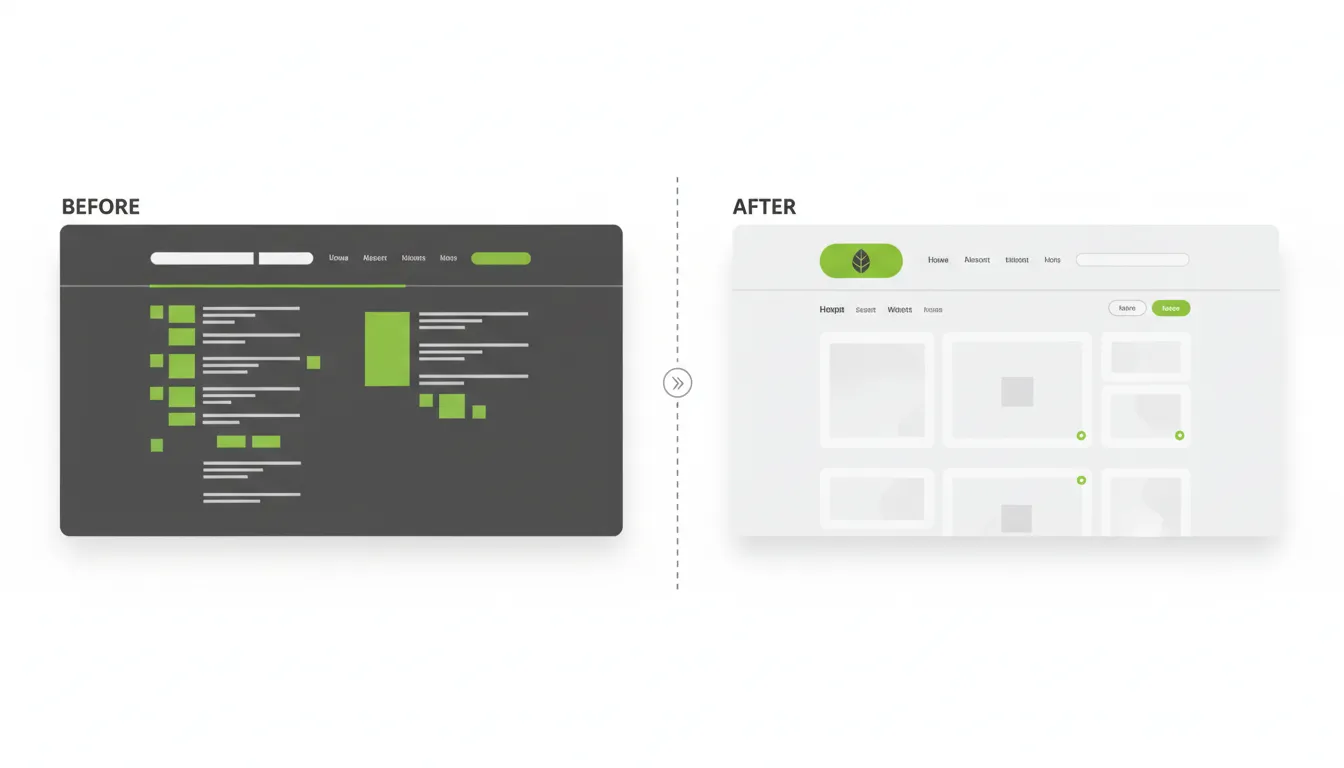
At Camfirst Solutions, we help businesses recognize when their website is holding them back — and build something better. Your website is the digital storefront of your business. It shapes first impressions, drives conversions, and reflects your brand identity. But websites age quickly in the fast-moving digital landscape. What looked modern and performed well three years ago may now be costing you leads, customers, and revenue.
Knowing when to invest in a redesign can be the difference between steady growth and a slow decline. Here are ten clear signs that your website is overdue for a refresh in 2026.
1. Your Website Loads Slowly
Page speed has a direct impact on user experience and search engine rankings. Research consistently shows that users expect pages to load in under three seconds, and every additional second of delay increases bounce rates significantly. Google has made Core Web Vitals a ranking factor, meaning that slow websites are penalized in search results.
If your site takes more than three seconds to load on desktop or mobile, it is actively pushing visitors away. Common culprits include unoptimized images, bloated code, excessive third-party scripts, and outdated hosting infrastructure. For actionable fixes, see our guide on how to improve your website speed score.
A professional web development team can audit your site performance and implement modern optimization techniques such as lazy loading, code splitting, image compression, and server-side caching to bring load times down to acceptable levels.
2. Your Website Is Not Mobile-Friendly
Mobile traffic now accounts for well over half of all web traffic globally. Google uses mobile-first indexing, meaning it primarily evaluates the mobile version of your site when determining rankings. If your website is not fully responsive, you are losing both visitors and search visibility.
Signs of poor mobile experience include text that requires pinching and zooming to read, buttons too small or too close together to tap accurately, horizontal scrolling, and content that extends beyond the screen width. A redesign built on responsive design principles ensures your site looks and functions flawlessly across smartphones, tablets, and desktops alike.
3. You Have a High Bounce Rate
A high bounce rate means visitors are arriving at your site and leaving without engaging. While some bounce is natural, rates consistently above 70 percent for content pages or above 50 percent for landing pages suggest a serious problem.
Common causes include slow load times, confusing layouts, irrelevant content, intrusive pop-ups, and a disconnect between what the visitor expected from the search result or ad and what they found on the page. A well-planned redesign addresses these issues by improving content relevance, streamlining navigation, and creating clear user pathways that encourage deeper exploration.
Pairing a redesign with a solid SEO strategy ensures that the traffic arriving at your site is qualified and that the experience meets their expectations.
4. Your Design Looks Outdated
Web design trends evolve rapidly. Visitors form an opinion about your site within milliseconds, and an outdated design immediately undermines credibility. If your site still features stock photography from the early 2010s, flash elements, cluttered layouts, tiny fonts, or design patterns that were popular five or more years ago, it signals to visitors that your business may not be keeping pace with modern standards.
An outdated design does not just look bad. It erodes trust. Visitors associate visual quality with business quality. If your website looks neglected, they will assume your products or services might be too. To see what modern standards look like, review the top web design trends for 2026.
A modern redesign by an experienced graphic design team brings your visual identity in line with current expectations, using clean layouts, contemporary typography, high-quality imagery, and thoughtful use of white space to create a professional and trustworthy impression.
5. Your SEO Performance Is Declining
If your organic traffic has been dropping steadily or your pages are losing rankings for important keywords, your website architecture and content may be to blame. Search engines reward sites that follow current best practices for technical SEO, content structure, page speed, and user experience.
Older websites often have issues such as missing or duplicate meta tags, poor heading hierarchy, broken links, unstructured URLs, missing schema markup, and content that no longer aligns with search intent. A redesign provides the opportunity to rebuild your site with a strong SEO foundation, implementing proper site architecture, clean URLs, optimized metadata, and structured data from the ground up.
Investing in professional SEO services alongside your redesign ensures that the new site is positioned to attract and retain organic traffic from day one.
6. Navigation Is Confusing or Difficult
If visitors cannot find what they are looking for within a few clicks, they will leave. Complex mega menus, inconsistent navigation patterns, buried contact information, and poorly labeled links all contribute to a frustrating user experience.
Good navigation should be intuitive. Visitors should be able to understand your site structure at a glance and reach any important page within two or three clicks. A redesign allows you to restructure your information architecture based on actual user behavior data, creating logical content hierarchies and clear navigation pathways.
A thoughtful UI/UX design process maps out user journeys and ensures that every page serves a clear purpose within the broader site structure.
7. There Are No Clear Calls to Action
Every page on your website should guide visitors toward a specific action, whether that is requesting a quote, scheduling a consultation, making a purchase, or signing up for a newsletter. If your pages lack clear, compelling calls to action, you are leaving conversions on the table.
Effective CTAs are visually distinct, use action-oriented language, and are positioned where users naturally look as they consume content. They should be consistent across the site while being tailored to the context of each page. A redesign gives you the opportunity to plan and implement a conversion-focused layout with strategically placed CTAs that align with your business goals.
8. Your Website Has Security Vulnerabilities
Website security is non-negotiable. If your site does not use HTTPS, runs on an outdated content management system, or has not received security patches in months, it is vulnerable to attacks. Browsers now display warnings for non-HTTPS sites, which immediately drives away visitors. Google also considers HTTPS a ranking signal.
Beyond the technical aspects, data breaches and security incidents damage brand reputation in ways that are difficult to recover from. A redesign on a modern, well-maintained platform with up-to-date security practices protects both your business and your customers.
Common security improvements during a redesign include migrating to HTTPS, implementing content security policies, updating to the latest CMS version, removing unused plugins, and establishing a regular maintenance and update schedule.
9. Your Website Is Not Accessible
Web accessibility is both a legal requirement in many jurisdictions and a moral obligation. If your website cannot be used effectively by people with disabilities, you are excluding a significant portion of your potential audience and may be exposing your business to legal risk.
Common accessibility problems include missing alt text on images, poor color contrast ratios, lack of keyboard navigation support, missing form labels, auto-playing media without controls, and content that is not compatible with screen readers.
Modern web standards and frameworks make it significantly easier to build accessible websites from the start rather than retrofitting accessibility onto an existing design. A redesign provides the opportunity to implement WCAG 2.2 compliance throughout the site, ensuring that all users can access your content regardless of ability.
10. Your Website No Longer Reflects Your Brand
Businesses evolve. Your products, services, messaging, and target audience may have shifted significantly since your website was last designed. If your website no longer accurately represents who you are and what you offer, it creates confusion and erodes trust.
Brand misalignment manifests in several ways. Perhaps your logo, color palette, or typography have been updated elsewhere but not on the website. Maybe you have added new services that are not represented online. Or perhaps your brand voice and messaging have matured, but the website still reflects an earlier stage of your business.
A redesign is the opportunity to bring your entire digital presence into alignment with your current brand identity. Working with a professional graphic design team ensures that your website communicates a consistent, cohesive brand story across every page and interaction.
How to Approach a Website Redesign
Recognizing that your website needs a redesign is the first step. The next is planning the project carefully to maximize the return on your investment.
Set Clear Goals
Before starting the redesign, define what success looks like. Are you trying to increase lead generation, improve search rankings, reduce bounce rates, or modernize your brand image? Clear goals inform every design and development decision.
Audit Your Current Site
Analyze your existing site data to understand what is working and what is not. Review analytics for traffic patterns, bounce rates, conversion rates, and user flow. Identify your highest-performing content and your biggest drop-off points. This data should guide the redesign strategy.
Prioritize User Experience
A redesign is not just about making things look better. It is about making things work better for your users. Invest in proper UI/UX design to ensure that the new site is intuitive, accessible, and conversion-focused.
Plan for SEO Migration
One of the biggest risks in a redesign is losing existing search rankings. Proper URL mapping, 301 redirects, and content migration planning are essential to preserving the SEO equity you have built over time. Our website migration guide walks through this process step by step.
Choose the Right Partner
A website redesign is a significant investment. Partner with a team that understands your industry, takes a strategic approach, and can deliver a site that performs on every level, from design and usability to speed and search visibility.
Take the Next Step
If your website is showing any of these warning signs, it is time to take action. A well-executed redesign does not just fix problems. It creates a competitive advantage, generating more traffic, more leads, and more revenue for your business.
Start Your Website Redesign with Camfirst Solutions
At Camfirst Solutions, we specialize in building modern, high-performance websites that drive real business results. Our team handles everything from web development and UI/UX design to SEO, graphic design, and digital marketing, ensuring your new website is built to perform from day one. Contact us today to discuss your redesign project and get a free consultation.